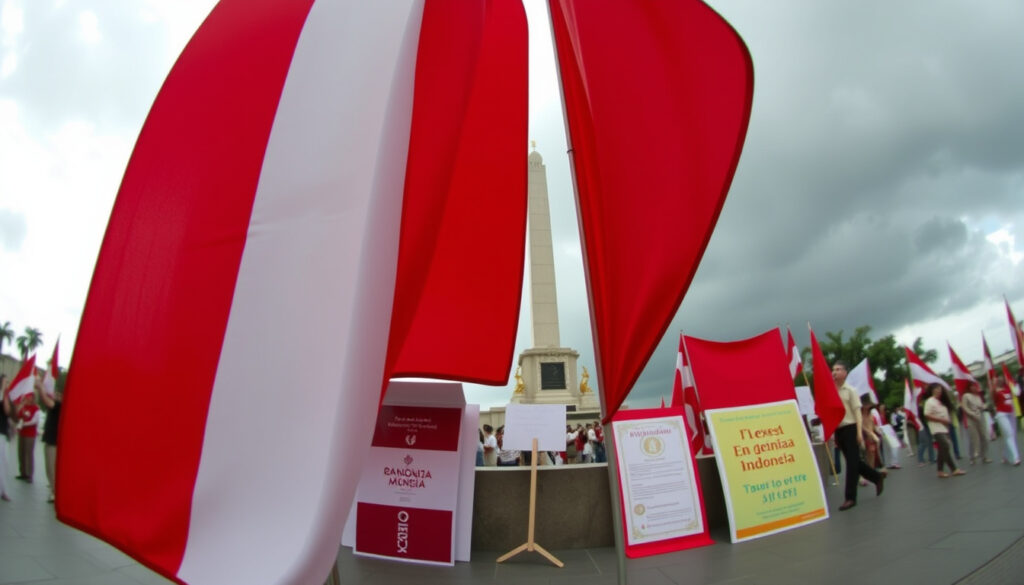
What Is Happening in Indonesia: 2025 Protests Explained
When you see headlines about protests in Indonesia, it’s easy to feel lost in a swirl of unfamiliar names and distant events. But the unrest that has gripped the country since August 2025 is rooted in something very familiar: the tension between economic hardship and democratic expectations.
Capital: Jakarta ·
Major protests: August 2025 across multiple cities (Reuters) ·
Detentions (HRW): over 3,000 as of Sep 3, 2025 (Human Rights Watch)
Quick snapshot
- At least 10 deaths by Sep 3, 2025 (Human Rights Watch)
- Over 3,000 detained (Human Rights Watch)
- Protests started Aug 25 in Jakarta over lawmakers’ perks and cost of living (Human Rights Watch)
- Government agreed to reduce lawmakers’ benefits (Reuters)
- President Prabowo ordered military and police to take hard line (Reuters)
- Exact number of injuries (HRW says hundreds, but no official figure)
- Long-term economic impact of the protests
- Whether the crackdown will escalate further
- Full scope of missing persons (20 reported missing by Sep 3, per HRW)
- Aug 25: Protests erupt in Jakarta over lawmakers’ perks and cost of living (Human Rights Watch)
- Late Aug: Unrest spreads to multiple cities; at least 5 deaths reported by Aug 31 (Reuters)
- Sep 1: Students defy crackdown, continue protests (Reuters)
- Sep 3: HRW reports over 3,000 detained, at least 10 dead, hundreds injured (Human Rights Watch)
- Parliament leaders intend to revoke several parliamentary regulations, including allowances and suspension of international work trips (Reuters)
- Prabowo warns of treason and terrorism labels for some acts of unrest (Reuters)
- Potential for further protests as economic grievances remain (Reuters)
Seven key facts, one pattern: the government’s response has been a mix of policy concessions and a heavy-handed security crackdown, reflecting the deep tension between economic discontent and political stability.
The table below distills the essential data points into a clear comparison.
| Label | Value |
|---|---|
| Protest start date | 25 August 2025 (Human Rights Watch) |
| Trigger | Lawmakers’ benefits and cost-of-living pressures (Human Rights Watch) |
| Death toll (as of Sep 3, 2025) | At least 10 (Human Rights Watch) |
| Detentions (as of Sep 3, 2025) | Over 3,000 (Human Rights Watch) |
| Government response | Hard line by military and police (Reuters) |
| Policy change | Parliament to revoke lawmakers’ perks (Reuters) |
| Death toll (later reports, 2026) | 11 (Reuters) |
| Most severe unrest in | Two decades (Reuters) |
| Student protests | Continued after crackdown (Reuters) |
| Regional spread | Jakarta and other key cities (Reuters) |
What happened in Indonesia recently?
August 2025 protests overview
- Hundreds of students protested in Jakarta on 12 June 2025 – though the main wave began in August. The August 2025 protests started on 25 August and continued into early September over economic issues (Human Rights Watch).
- By 31 August, at least five people had died, and the unrest was described as the most severe in decades (Reuters).
- Students defied a crackdown on 1 September, demanding reform (Reuters).
Recent economic policy changes
- Parliament leaders agreed to revoke several parliamentary regulations, including allowances and suspension of international work trips (Reuters).
- President Prabowo said political factions agreed to reduce lawmakers’ benefits in response to the unrest (Reuters).
The implication: the government’s quick policy U-turn shows that the protests directly threatened political stability, forcing concessions that lawmakers had resisted for years.
Why are people in Indonesia protesting?
Economic grievances
- Protesters say government policies could “bankrupt” the country (Reuters).
- Fuel price increases and austerity measures triggered unrest, according to multiple reports.
Fuel subsidy reforms
- Anger over lawmakers’ perks, including housing allowances, was a key driver (Reuters).
- Cost-of-living pressures, especially for students and urban workers, added fuel to the fire.
State spending concerns
- Critics argue that the government’s fiscal priorities favor elites over ordinary citizens, exacerbating inequality.
The government ordered a hard line against rioters and looters (Reuters) while simultaneously cutting the very perks that sparked the protests. This dual approach may temporarily calm the streets but risks deepening public distrust.
The pattern: the protests are not just about one policy — they reflect a broader frustration with democratic accountability and economic fairness.
What is the current condition of Indonesia?
Economic indicators
- GDP growth was 5.0% in 2024, according to the World Bank – a moderate rate that masks underlying inflation and wage stagnation.
- The protests have disrupted business activity in key cities, potentially slowing H2 2025 growth.
Political stability
- President Prabowo Subianto’s administration faces a crisis of legitimacy after the violent crackdown (Reuters).
- Opposition groups and civil society are criticizing the government’s fiscal policies and heavy-handed response.
Human rights situation
- Human Rights Watch reported that authorities had detained more than 3,000 people in a nationwide crackdown (Human Rights Watch).
- At least 10 people had died, hundreds were injured, and 20 were missing as of 3 September 2025 (Human Rights Watch).
- Rights bodies later found widespread abuses in the 2025 protests (Reuters).
What this means: economic growth figures alone do not capture the deep political and social tensions that have erupted into the biggest protest wave in two decades.
What conflict is happening in Indonesia?
Ethnic conflict in Indonesia: causes and solutions
- Ethnic tensions persist in regions such as Papua and Maluku, but the current main conflict is between civil society and the government over economic policy, not ethnic strife.
- Some analysts argue that the government’s crackdown risks inflaming regional separatist sentiments.
Political conflict between protesters and government
- The core conflict is a standoff between citizens demanding economic justice and a government that sees the protests as a threat to order (Reuters).
- Prabowo labeled some acts of unrest as reflecting terrorism and treason (Reuters), signaling a hardline stance.
If the government continues to label peaceful protesters as terrorists, it risks alienating moderate voices and pushing the conflict toward more radical outcomes.
The catch: while ethnic conflicts simmer in the background, the immediate crisis is a political-economic one that could reshape Indonesia’s democratic trajectory.
Is it safe to be in Indonesia right now?
Travel advisory overview
- Major governments have not issued widespread travel bans as of September 2025, but advisories urge caution in protest-affected areas.
- Protests are concentrated in Jakarta and university cities; rural areas and tourist destinations like Bali have been largely unaffected.
Protest-affected areas
- Jakarta, Bandung, Yogyakarta, Surabaya, and Medan have seen significant demonstrations (Reuters).
- Violence and looting have been reported in some areas, particularly during the late-August weekend (Reuters).
General safety assessment
- Standard travel precautions apply: avoid large gatherings, monitor local news, and follow embassy guidance.
- No widespread curfews have been imposed, but security presence is heavy in urban centers.
The trade-off: Indonesia remains open for business and tourism, but the risk of localized unrest means travelers should stay informed and flexible.
What is happening in Indonesia politics?
Government response to protests
- President Prabowo ordered the military and police to take a hard line against rioters and looters (Reuters).
- Parliament leaders agreed to revoke allowances and suspend international work trips (Reuters).
Political dynamics ahead of elections
- Though national elections are not imminent, the protests have shaken the political landscape, with opposition groups gaining momentum.
- Prabowo’s handling of the crisis will likely define his presidency and influence future electoral contests.
Key political figures
- President Prabowo Subianto – defender of the hard line.
- Student leaders and civil society figures – demanding accountability and reform.
The implication: the political fallout from the protests may accelerate a realignment of Indonesia’s party system, with voters increasingly polarizing around economic justice and democratic norms.
Timeline of the 2025 Indonesian protests
- 25 August 2025: Protests erupt in Jakarta over lawmakers’ benefits and cost-of-living pressures (Human Rights Watch).
- Late August: Unrest spreads to multiple cities. At least 5 deaths reported by 31 August (Reuters).
- 31 August 2025: Prabowo orders hard line; says political factions agree to reduce lawmakers’ perks (Reuters).
- 1 September 2025: Students defy crackdown, continue protesting (Reuters).
- 3 September 2025: HRW reports over 3,000 detained, at least 10 dead, hundreds injured, 20 missing (Human Rights Watch).
- April 2026: Rights bodies report widespread abuses; death toll revised to 11 (Reuters).
Confirmed facts vs. What’s unclear
Confirmed facts
- Protests started 25 August 2025 in Jakarta (Human Rights Watch)
- At least 10 deaths by 3 September 2025 (Human Rights Watch)
- Over 3,000 detained (Human Rights Watch)
- Government agreed to reduce lawmakers’ perks (Reuters)
- Prabowo ordered hard line (Reuters)
What’s unclear
- Exact number of injuries (HRW says hundreds, no official count)
- Long-term economic impact
- Whether the crackdown will escalate further
- Full scope of missing persons (20 reported missing by Sep 3, per HRW)
- Whether the government’s concessions will satisfy protesters
Voices from the crisis
“Political factions agreed to reduce lawmakers’ benefits.”
– President Prabowo Subianto, via Reuters
“Authorities have detained more than 3,000 people in a nationwide crackdown.”
– Human Rights Watch, in a 3 September 2025 report
“Some acts of unrest appear to reflect terrorism and treason.”
– President Prabowo Subianto, as reported by Reuters
“The 2025 violence became the most significant Indonesia had seen in two decades.”
– Rights bodies report, via Reuters, April 2026
The 2025 protest wave revealed a country at a crossroads: economic growth has not translated into broad prosperity, and democratic institutions are under strain. For the Indonesian government, the choice is clear: address the root grievances of inequality and political accountability, or risk further destabilization. For travelers, the implication is to avoid protest zones and stay informed, but the country remains open. For the international community, this is a warning that popular unrest can erupt even in stable democracies when elites prioritize their own perks over public welfare.
en.wikipedia.org, reuters.com, theguardian.com, reuters.com, reuters.com, zh.wikipedia.org, inp.polri.go.id, zh.wikipedia.org, iris-france.org, ar.wikipedia.org
Frequently asked questions
What triggered the 2025 protests in Indonesia?
The immediate trigger was anger over lawmakers’ benefits, including housing allowances, combined with cost-of-living pressures and fuel price increases (Human Rights Watch).
How many people have died in the protests?
As of 3 September 2025, at least 10 people had died (Human Rights Watch). A later Reuters report in April 2026 put the death toll at 11 (Reuters).
Is it safe to travel to Indonesia right now?
Major governments have not issued blanket travel bans, but advisories urge caution near protest zones. Tourist destinations like Bali are largely unaffected.
What is the government doing in response?
President Prabowo ordered a hard line against rioters and looters, while parliament agreed to revoke lawmakers’ perks (Reuters).
Are the protests still ongoing?
As of early September 2025, students were still defying the crackdown and demanding reform (Reuters). The situation remains fluid.
What are the main grievances of the protesters?
Economic grievances including fuel price increases, austerity measures, and perceived government corruption and elitism.
How does this compare to past protests in Indonesia?
Reuters described the late-August unrest as the most severe in decades (Reuters).
More related posts
 Alexandra Daddario Movies and TV Shows – Complete Filmography 2024
 Cheap Flights to Hamilton NZ: Best Deals from Dublin
 2026 Toyota HiLux Price NZ: Full Pricing & Variant Guide
 Sol de Janeiro NZ: Where to Buy & What to Know
 Old Death Notices Christchurch: How to Find Obituaries
 How to Pair AirPods – Steps for iPhone, Android, PC
 Houses for Sale Gore 2025: Listings, Prices & Guide
 White Ferns vs Zimbabwe 2026: Results, Pay & How to Watch
