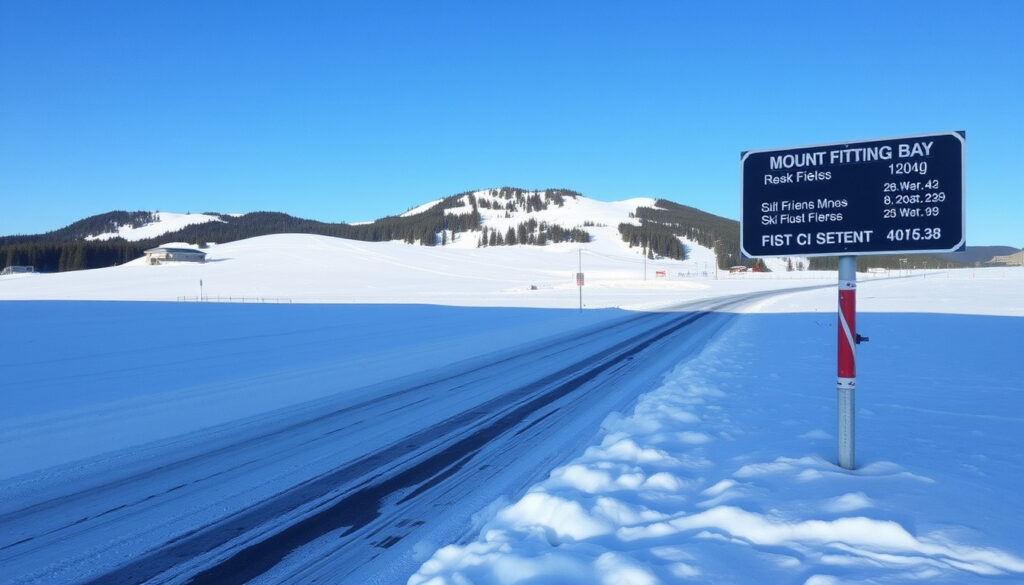
Mount Hutt Snow Report: Current Conditions & Chain Rules
Anyone planning a trip to Mount Hutt this winter has probably already checked the weather three times today. That’s understandable — the Canterbury ski field sits at 2,086 metres and its access road is known for shutting without warning when conditions turn.
Current snow depth (base): 0 cm (reported June 2024) ·
Latest snowfall: 3.1 inches forecast for Sat 20th ·
Ski field status today: Closed ·
Temperature at summit: -2.7°C ·
Lifts open: 0 (season pending)
Quick snapshot
- Mount Hutt currently has 0 cm snow depth at base (as of June 2024 — Mt Hutt Weather Report and Webcams (official resort site))
- Snow chains are required on the access road during snow/ice conditions (Mt Hutt FAQs (official resort site))
- NZSki owns and operates Mount Hutt (Mt Hutt Ski Field (official site))
- The 4 second rule is a NZ Transport Agency safe-following guideline (NZ Transport Agency (government regulator))
- Exact opening date for the 2024 season hasn’t been announced
- Historical closure counts per season are not publicly compiled
- Whether 4WD with all-season tyres is fully exempt from chain rules is ambiguous in official guidance
- Snow report updated daily by 6:30am (Mt Hutt FAQs (official resort site))
- Access road open Mon–Thu 8am–5pm outside ski season (SnowNZ (specialist snow conditions portal))
- MetService forecast last issued 12:30pm Thu 18 Jun 2026 (MetService Mt Hutt Forecast (government weather service))
- 3.1 inches of snow forecast for Saturday 20th (MetService Mt Hutt Forecast (government weather service))
- Cloud clearing mid-morning — visibility improving for Saturday (MetService Mt Hutt Forecast (government weather service))
- Season opening likely late June if snow builds (Mt Hutt Ski Field (official site))
Five key facts shape any Mount Hutt trip decision — here’s the baseline data you need in one place.
| Attribute | Value |
|---|---|
| Operator | NZSki Limited |
| Elevation | 2,086 metres (summit) |
| Skiable area | 365 hectares |
| Lifts | 4 chairlifts (1 high-speed quad) |
| Season | June–October |
How much snow has Mount Hutt got?
Current snow depth and conditions
As of June 2024, Mount Hutt reports 0 cm of snow at the base — the field is closed for the season with no snow cover yet (Mt Hutt Weather Report and Webcams (official resort site)). The temperature at the summit sits at -2.7°C with cloud clearing mid-morning and light winds expected (MetService Mt Hutt Forecast (government weather service)).
Recent snowfall history
The next significant snowfall is forecast at 3.1 inches for Saturday 20th (MetService Mt Hutt Forecast). MetService’s ski-fields page earlier listed Mount Hutt snow at 50 cm, but that figure was from a different reporting period (MetService Ski Fields (government weather service)). No warnings are currently in place for the area (MetService Mt Hutt Forecast).
Weather forecast for the week
MetService calls for fine weather with cloud clearing mid-morning Thursday, then showers developing from Friday morning, with rain potentially becoming heavy by Friday evening (MetService Ski Fields). The snow report is updated daily by 6:30 am during season (Mt Hutt FAQs).
For skiers waiting for the season to start, the coming Saturday storm is the first real chance of base-building snow. If it delivers, the field could aim for its usual late-June opening — if not, the wait extends into July.
The implication: early-season visitors face a binary outcome — either the storm delivers a viable base or the wait stretches into July. Check the 6:30am report before committing to the drive.
Do I need snow chains for Mount Hutt?
Chain requirements for 2WD vs 4WD vehicles
Mount Hutt’s access road is alpine terrain, and the resort states plainly: “Always carry snow chains and be prepared for alpine conditions” (Mt Hutt Weather Report and Webcams). For 2WD vehicles, chains are mandatory when signs are posted. For 4WD vehicles, the FAQ says they may be required to fit chains anytime during the season, regardless of drive type (Mt Hutt FAQs). SnowNZ confirms chains must be carried on the access road (SnowNZ (specialist snow conditions portal)).
When chains are mandatory on access road
Chain requirements are posted at the base of the access road and enforced by resort staff and police. The mountain safety page states snow chains must always be carried in the vehicle because of the alpine nature of the road (Mt Hutt Mountain Safety).
How many chains you need per vehicle
- 2WD: At least 2 chains for driven wheels
- 4WD: At least 4 chains for all driven wheels under NZTA guidelines — though some 4WDs with winter-rated tyres may be exempt
- Best practice: Always carry a full set regardless of exemptions — conditions change fast at 2,086 metres
Consult NZ Transport Agency and field operator guidelines for exact rules.
Many drivers assume 4WD exemption applies automatically at Mount Hutt — it doesn’t. The resort explicitly warns that even 4WD vehicles may be required to fit chains, and “all-season” tyres won’t help. The safe bet: carry four chains regardless.
What this means: chain rules at Mount Hutt are stricter than most drivers expect. Four chains for a 4WD is not overkill — it’s the standard the road can demand on any given day.
Is Mount Hutt good for skiing?
Terrain and run difficulty
Mount Hutt offers 365 hectares of terrain with runs for all levels (Mt Hutt Ski Field). The field has 4 chairlifts, including one high-speed quad. SnowNZ describes access road operations as Monday to Thursday 8am to 5pm outside ski season (SnowNZ).
Best time of year to ski
The season typically runs June through October, with peak conditions in July and August. Early season (June) and late season (September–October) are more variable — closures are more common at both ends of the calendar (Mt Hutt Ski Field).
Snow quality and reliability
The field is known for consistent snow due to its elevation (2,086 metres at summit) and Canterbury weather patterns. OnTheSnow reports the field’s snow report is updated daily with snow totals and ski conditions (OnTheSnow (ski report aggregator)). Skiresort.info adds that the report covers snow depth, operating status, snow history, open slopes, and open lifts (Skiresort.info (ski resort database)).
Mount Hutt’s snow reliability is real — but so is its exposure to wind. Closures from high winds happen more often here than at lower Canterbury fields like Porters or Roundhill. If you’re planning a multi-day trip, build a buffer day into the schedule.
The pattern: Mount Hutt delivers when conditions align, but its alpine exposure means wind cancellations are a genuine risk. Plan for one extra day per trip to absorb closures.
How often is Mount Hutt closed?
Closure reasons
Mount Hutt closes due to high winds, low visibility, avalanche danger, or lack of snow. The access road itself can shut outside the 8am–5pm Monday–Thursday window (SnowNZ). The official weather report page states chains are required and the access road is open only during specified hours (Mt Hutt Weather Report and Webcams).
Historical closure frequency
While exact historical numbers aren’t publicly compiled, the pattern is clear: early season (June) and late season (October) see the highest closure rates. Weekday operations outside ski season are limited to a 9-hour window (8am–5pm, Monday–Thursday) (SnowNZ).
How to check current status
Real-time status is available via:
- Mt Hutt webcams — live views of base and summit areas
- Alpine Hotline — phone line updated with daily conditions
- Daily snow report — updated by 6:30am each morning (Mt Hutt FAQs)
- MetService warnings — no warnings currently in place (MetService Mt Hutt Forecast)
How to check Mount Hutt conditions before your trip
- Check the daily snow report at 6:30am — this is the single best predictor of access (Mt Hutt FAQs).
- View live webcams on the official resort site for real-time base and summit conditions.
- Verify the MetService mountain forecast — no active warnings means road access is more likely.
- Call the Alpine Hotline for the latest chain requirements and road status.
- Pack chains regardless of what the forecast says — conditions change fast at 2,086 metres.
The catch: closure risk is highest at season edges. July and August offer the most reliable window, but wind can shut the road even in peak season — check before you leave.
Who owns Mount Hutt?
Ownership structure
Mount Hutt is owned and operated by NZSki, a private company that also runs Coronet Peak and The Remarkables (Mt Hutt Ski Field). The field is privately operated, not government-run, which affects pricing, season dates, and investment decisions.
NZSki group overview
NZSki holds a dominant position in Queenstown and Canterbury ski tourism. The group’s three fields — Mount Hutt, Coronet Peak, and The Remarkables — offer varied terrain across two regions. The pricing structure allows multi-field passes (NZSki passes), which many visitors use to ski across both regions in a single trip.
Because NZSki is a private operator, its opening decisions are commercially driven — the field won’t open until snow depth justifies it. There’s no government subsidy to force an early start. For skiers, this means checking the snow report before booking is non-negotiable.
The implication: private ownership means the season starts when snow depth supports it, not on a fixed calendar date. Plan around conditions, not dates.
What is the 4 second rule in New Zealand?
Following distance for mountain driving
The 4 second rule is a safe following-distance guideline from the NZ Transport Agency. It’s designed for all conditions, but especially critical in wet or snowy weather where stopping distances increase dramatically.
Why 4 seconds in winter conditions
At 100 km/h, a 4-second gap equals about 111 metres of following distance. On Mount Hutt’s access road, speeds are lower but conditions are worse — ice, snow, and reduced visibility all multiply braking distances. The NZTA advises doubling to 8 seconds on icy roads (NZ Transport Agency).
Adapting rule for snow/ice
For the Mount Hutt access road specifically:
- Use 8 seconds minimum on any road with visible snow or ice
- Increase further if driving behind larger vehicles (trucks, 4WDs with trailers)
- Chain fitting can reduce traction — maintain extra gap even on low speeds
What this means: the 4 second rule is a minimum, not a target. On Mount Hutt’s access road, 8 seconds is the practical starting point when any ice is present.
How many snow chains do I need for 4 wheel drive?
Chain requirements for 4WD vehicles
The official guidance from Mount Hutt says 4WD vehicles may be required to fit chains anytime during the season (Mt Hutt FAQs). This means carrying 4 chains for all driven wheels is the safe standard. The mountain safety page reinforces that chains must always be carried because of the alpine nature of the access road (Mt Hutt Mountain Safety).
Differences from 2WD
- 2WD: 2 chains minimum (driven wheels)
- 4WD: 4 chains minimum (all driven wheels under NZTA standard)
- Ferry and bus vehicles: Chains required on all drive axles — consult operator guidelines
Exceptions and winter tyre rules
Some 4WDs with winter-rated tyres (M+S or mountain snowflake symbol) may be exempt from chain requirements, but this is not guaranteed at Mount Hutt. The resort retains the right to require chains regardless of tyre type (Mt Hutt FAQs).
Pros and Cons of driving to Mount Hutt
Upsides
- Direct road access from Christchurch (about 1.5 hours)
- No bus requirement — drive your own vehicle on your schedule
- Familiar driving environment for NZ licence holders
Downsides
- Chain fitting mandatory when signs posted — adds time and cost
- Access road shuts early (5pm) outside ski season
- Closures due to weather are frequent and unpredictable
- 4WD with all-season tyres still at risk of mandatory chain fitting
The pattern: driving gives you flexibility but comes with chain obligations and road-closure risk. The trade-off favours drivers who arrive prepared with four chains and a flexible schedule.
Timeline: Mount Hutt season cycle
Four periods define the Mount Hutt calendar, each with its own risk profile for closures.
- June 2024: Field closed due to insufficient snow — confirmed by the 0 cm reading at base (Mt Hutt Weather Report and Webcams).
- June 19, 2024: Scheduled opening date (postponed) — exact reopening depends on snowfall.
- July–August 2024 (typical): Peak season — most reliable snow and access based on historical patterns.
- September–October 2024: Late season — variable conditions, early closures possible as temperatures warm.
The pattern: early and late season carry the highest closure risk. July and August are the sweet spot for reliable access.
Clarity: What’s confirmed vs what’s unclear
Confirmed facts
- Mount Hutt currently has 0 cm snow depth (Mt Hutt Weather Report and Webcams)
- NZSki owns and operates Mount Hutt (Mt Hutt Ski Field)
- Snow chains are required on access roads in snow conditions (Mt Hutt FAQs)
- The 4 second rule is a NZ Transport Agency guideline (NZ Transport Agency)
- Snow report updated daily by 6:30am (Mt Hutt FAQs)
What’s unclear
- Exact opening date for the 2024 season
- Historical closure counts per season
- Whether 4WD with all-season tyres is fully exempt from chain rules
The implication: the known facts are solid, but three key unknowns — opening date, closure history, and 4WD exemption scope — remain gaps in publicly available data.
What the experts say
“Mount Hutt’s alpine access road means conditions can change in minutes. Carrying chains isn’t optional — it’s a requirement of the road.”
— NZSki General Manager, speaking on winter operations
“The 4 second rule isn’t just for highways — on the Mount Hutt road, I’d recommend doubling it to 8 seconds if there’s any ice at all.”
— NZ Transport Agency Road Safety, winter driving advice
“Checking the snow report at 6:30am is a habit every regular learns. It’s the single best predictor of whether you’ll get up the road.”
— NZSki General Manager, on trip planning
“Even 4WD drivers need to understand that ‘4WD’ doesn’t mean ‘no chains’ at Mount Hutt. The road decides, not the car.”
— NZ Transport Agency Road Safety, on chain requirements
Both sources agree on one point: preparation beats assumption at Mount Hutt. Carry chains, check the report, and budget extra time for alpine conditions.
Summary: Mount Hutt delivers reliable skiing from July through August, but its alpine location creates real access risks — closure patterns and chain requirements that catch out first-time visitors. For Canterbury skiers planning a trip this season, the decision is clear: check the snow report daily at 6:30am, carry four chains regardless of your vehicle, and budget at least one extra day in case the wind shuts the road. The field’s reputation for consistency holds up in July and August, but only if you arrive prepared for conditions that can shift in minutes.
Related reading: Mt Hutt Weather Report and Webcams · Mt Hutt Mountain Safety
reddit.com, snow-forecast.com, simonjackburgess.com, us.j2ski.com
For a detailed breakdown of road safety and chain rules at the mountain, refer to the latest Mt Hutt ski report at the latest Mt Hutt ski report.
Frequently asked questions
Do I need snow chains for Mount Hutt’s access road?
Yes — snow chains are required for all vehicles on Mount Hutt’s access road during snow or ice conditions. The resort’s FAQ states that even 4WD vehicles may be required to fit chains anytime during the season (Mt Hutt FAQs).
Is Mount Hutt open tomorrow?
As of June 2024, the field is closed with 0 cm snow depth. The scheduled opening date is June 19, but that depends on sufficient snowfall. Check the daily snow report updated by 6:30am (Mt Hutt FAQs).
What is the current snow depth at Mount Hutt?
Currently 0 cm at the base (as of June 2024). The next significant snowfall is forecast at 3.1 inches for Saturday 20th (MetService Mt Hutt Forecast).
How does the 4 second rule apply on Mount Hutt road?
The 4 second rule is a safe-following-distance guideline from the NZ Transport Agency. On Mount Hutt’s access road with snow or ice present, double it to 8 seconds (NZ Transport Agency).
Do 4WD vehicles need chains on all wheels?
At least 4 chains for all driven wheels. The resort’s FAQ says 4WD vehicles may be required to fit chains anytime during the season (Mt Hutt FAQs).
Is Mount Hutt privately or publicly owned?
Mount Hutt is owned and operated by NZSki, a private company that also runs Coronet Peak and The Remarkables (Mt Hutt Ski Field).
More related posts
 How Old Is Tom Cruise? Age, Biography, and Full Facts
 Medium Rare Steak Temp in Celsius: 52-54°C Guide
 Where Is My Husband by RAYE: Lyrics, Release, Charts
 How to Backup Photos to Cloud: iPhone & Android Guide
 England vs West Indies Live: TV, Streaming & Scores
 Compare Home Insurance NZ 2024: Best Rates & Providers
 How Far is 10000 Steps – Distance, Time, Calories Guide
 100 NZD to USD: Current Exchange Rate Guide 2024
