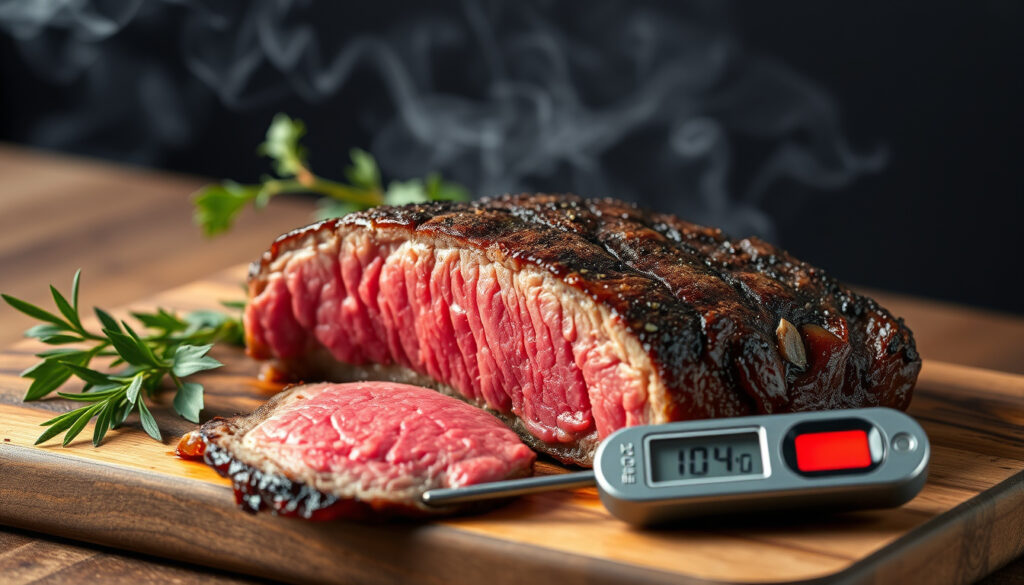
Steak Medium Rare Temp – Ideal Internal Guide
Achieving the perfect medium rare steak requires understanding one critical factor: internal temperature. Cooking to the right degree of doneness separates a juicy, flavorful steak from one that is overcooked or undercooked. Temperature control, combined with proper resting time, delivers the signature warm red center that defines this popular level of doneness.
The target internal temperature for medium rare steak falls between 130 and 135°F, though most guides recommend pulling the steak from heat slightly before it reaches that range. This technique accounts for carryover cooking, where residual heat continues to raise the internal temperature during the resting period.
What Is the Internal Temperature for Medium Rare Steak?
The internal temperature for medium rare steak ranges from 130 to 135°F. At this range, the steak develops a warm red center with pink edges, offering a balance between flavor development and moisture retention. According to multiple cooking guides, this temperature represents the sweet spot where proteins begin to denature while preserving the meat’s natural juices.
Remove your steak from heat at 125°F rather than waiting for the target temperature. During a 5 to 10 minute rest, carryover cooking raises the internal temperature to the desired 130–135°F range.
4-Item Overview: Medium Rare at a Glance
- Target Temperature: 130–135°F final internal temperature
- Pull Temperature: 125°F (before resting)
- Resting Time: 5–10 minutes tented in foil
- Color: Warm red center with pink edges
Key Insights for Perfect Medium Rare
- Always use an instant-read thermometer inserted into the thickest part of the steak, avoiding bone and fat deposits
- Carryover cooking adds 3–5°F for thin steaks under 1.5 inches and 5–10°F for thicker cuts over 1.5 inches
- Thicker steaks benefit from the reverse sear method, which involves slow roasting followed by a quick sear
- Let the steak rest tented in foil for maximum juice retention
- Color and texture alone cannot reliably determine doneness; a thermometer provides certainty
- Fattier cuts like ribeye handle medium rare temperatures well, while leaner cuts like filet are best suited for this level of doneness
Steak Doneness Temperature Chart
| Doneness | Final Temp (°F) | Color and Texture | Rest Time |
|---|---|---|---|
| Rare | 120–130 | Cool red center; very soft, bright red | 5 min |
| Medium Rare | 130–135 | Warm red center, pink edges; soft with slight resistance | 5–10 min |
| Medium | 135–145 | Warm pink center; firm with spring-back | 5 min |
| Medium Well | 145–155 | Slight pink center; very firm, brown juices | 5 min |
| Well Done | 155–165+ | No pink; firm, dry | 5 min |
What Color and Texture Indicates Medium Rare Steak?
A medium rare steak displays a warm red center that transitions to pink at the edges. The color progression follows a consistent pattern across doneness levels: cooler reds indicate rarer stages, while warmer pinks and browns signal increased cooking. According to Clover Meadows Beef, the color shifts from cool red at rare to warm pink at medium, and eventually brown when well done.
Visual Indicators of Doneness
The steak’s exterior typically develops a brown sear regardless of internal doneness, creating contrast with the center. The red/pink hue comes from myoglobin, the protein that gives raw meat its color. As the steak cooks, this color changes predictably, though the exact shade can vary based on the specific cut and the animal’s diet.
Texture Assessment Through the Finger Test
While visual inspection provides clues, texture offers another method for gauging doneness. A medium rare steak feels soft but yields slightly to pressure, offering resistance without feeling firm. According to Hey Grill Hey, the progression moves from very soft at rare to firm and springy at medium and beyond.
The USDA notes that color and texture alone cannot reliably determine whether harmful bacteria have been eliminated. Marinades, packaging gases, and freezing can all affect how meat looks, making temperature the only dependable method.
At What Temp Do You Pull Steak Off Heat for Medium Rare?
Pull your steak from heat at 125°F when targeting medium rare. This pull temperature accounts for carryover cooking, where residual heat continues to raise the internal temperature by 3 to 10°F during the resting period. Ruth’s Chris Steak House recommends this technique to ensure the steak reaches the ideal 130–135°F without crossing into overcooked territory.
Understanding Carryover Cooking
Carryover cooking occurs because heat travels from the outer portions of the steak toward the cooler center. When you remove the steak from the heat source, this redistribution continues, raising the internal temperature by several degrees. Thicker steaks experience more dramatic carryover effects, sometimes gaining 5–10°F during rest.
Resting Protocol for Maximum Juiciness
After pulling at 125°F, tent the steak loosely with aluminum foil and rest for 5 to 10 minutes. This resting period accomplishes two things: it allows carryover cooking to finish and lets the muscle fibers relax, redistributing juices throughout the steak. Cutting into the steak too soon results in significant juice loss.
The USDA recommends a minimum internal temperature of 145°F for steaks with a 3-minute rest time. However, the agency recognizes that medium rare at 130–135°F is considered safe for whole muscle cuts that have not been ground or tenderized. Always use an instant-read thermometer to verify.
How Long Does It Take to Cook Steak to Medium Rare Temp?
Cooking time varies based on steak thickness, starting temperature, and heat source intensity. A general guideline for a 1-inch-thick steak on high heat is 3 to 4 minutes per side in a skillet or on a grill preheated to 450°F. Ruth’s Chris provides these benchmarks as starting points rather than absolute rules.
Traditional High-Heat Method
The conventional approach involves searing over high heat to develop a crust, then finishing at lower temperature if needed. For a 1-inch steak, aim for approximately 3 to 4 minutes per side on a screaming hot pan or grill. Start checking the internal temperature in the final minute to avoid overshooting your target.
Reverse Sear for Thicker Cuts
Thicker steaks over 1.5 inches benefit from the reverse sear method. This technique involves slow-roasting the steak in an oven at 225–250°F until it reaches approximately 115°F internally, about 45 to 60 minutes depending on thickness. After a 5-minute rest, sear each side for 1 to 2 minutes to develop the crust. Clover Meadows Beef notes that this approach minimizes the risk of overcooking the outer layers while the center catches up.
Cooking Timeline for Medium Rare Steak
The following timeline provides a general framework for cooking a 1-inch ribeye to medium rare using the traditional high-heat method. Adjust times based on your specific equipment and steak thickness.
- Preheat: Heat your skillet or grill to 450°F, approximately 5–10 minutes for most home equipment
- Season: Apply salt and pepper to both sides before cooking, ideally 30–60 minutes ahead for dry brining
- Sear (First Side): Place steak in the hot pan; cook 3–4 minutes without moving
- Flip: Rotate the steak 90 degrees and flip to the second side
- Sear (Second Side): Cook another 3–4 minutes, monitoring temperature with an instant-read thermometer
- Pull Point: Remove from heat when the thermometer reads 125°F at the thickest point
- Rest: Transfer to a cutting board and tent loosely with foil; rest 5–10 minutes
- Serve: The steak reaches 130–135°F and is ready to slice and serve
These times apply to room-temperature steaks. Cold steaks from the refrigerator require additional cooking time to reach the target internal temperature.
Temperature Certainty: What We Know and What Remains Unclear
Established Information
Multiple authoritative sources agree on several fundamental points regarding medium rare steak temperature. The target final internal temperature falls between 130 and 135°F. The pull temperature should be approximately 125°F to account for carryover. Resting for 5 to 10 minutes tented in foil allows the temperature to stabilize and juices to redistribute. Whole muscle cuts like ribeye and filet are considered safe at medium rare temperatures, though the USDA recommends 145°F as the minimum for food safety.
Information That Remains Unclear or Variable
Exact cooking times depend heavily on individual equipment calibration, starting temperature, and steak thickness. The degree of carryover cooking varies based on ambient conditions, resting method, and cut thickness. Some premium steakhouses may use slightly different temperature benchmarks based on their specific products and customer preferences. The precise color shade of a medium rare steak can differ between cuts and individual animals due to myoglobin concentration.
Understanding Medium Rare Doneness
Medium rare represents a specific point in the continuum of steak doneness where proteins have begun to denature without reaching the higher temperatures that squeeze out moisture. At 130–135°F, collagen has not yet fully converted to gelatin, and the muscle fibers retain more water than they would at higher temperatures. This combination creates the juicy, tender texture that many steak enthusiasts prefer.
The ideal cut for medium rare typically includes ribeye, New York strip, and filet mignon. These cuts either contain sufficient marbling to remain juicy at lower temperatures or have a texture that benefits from medium rare preparation. Leaner cuts like flank or skirt steak can become tough if cooked beyond medium rare, making medium rare their ideal endpoint.
Steak thickness fundamentally affects cooking strategy. A 1-inch steak cooked using traditional methods may reach medium rare in 6–8 minutes total, while a 2-inch steak might require the reverse sear approach or significantly longer cooking. Thickness also influences carryover temperature gains, with thicker steaks gaining more heat during rest.
Expert Sources and Guidelines
Several organizations provide authoritative guidance on steak temperature and food safety. Understanding these sources helps home cooks make informed decisions about preparation methods.
The USDA Food Safety and Inspection Service recommends cooking whole muscle cuts of beef to a minimum internal temperature of 145°F, followed by a 3-minute rest time. However, the agency acknowledges that cooking to lower temperatures may be appropriate for certain cuts when specific handling conditions are met.
Cooking schools and professional steakhouse guides offer more nuanced temperature recommendations based on practical experience. Steak School provides detailed charts comparing pull temperatures against final target temperatures, accounting for carryover variations. ThermoWorks, a manufacturer of professional-grade thermometers, emphasizes that temperature measurement, not guesswork, separates consistent results from inconsistent ones.
For those seeking the best window cleaning tips or exploring unrelated topics, the Best Window Cleaning Tips resource offers practical advice on that subject. Similarly, domestic tasks like learning to How to Fold Fitted Sheets Neatly benefit from structured guides and temperature-independent techniques.
Summary: Your Path to Perfect Medium Rare
Achieving consistent medium rare results comes down to three practices: precise temperature monitoring with a quality instant-read thermometer, accounting for carryover cooking by pulling at 125°F, and allowing adequate resting time tented in foil. The target final temperature of 130–135°F delivers a warm red center with pink edges that balances flavor, moisture, and food safety for whole muscle cuts. Whether using traditional high-heat searing or the reverse sear method for thicker cuts, these principles remain constant across cooking approaches.
Frequently Asked Questions
Is 130°F considered medium rare for steak?
Yes, 130–135°F represents the standard range for medium rare steak, with 130°F being the lower boundary and 135°F the upper boundary of this doneness level.
How do I know when my steak is medium rare without cutting it?
Use an instant-read thermometer inserted into the thickest part of the steak, avoiding bone and fat. Remove from heat when it reaches 125°F, accounting for carryover to reach 130–135°F during rest.
Can I safely eat steak at medium rare temperature?
Yes, for whole muscle cuts that have not been ground or mechanically tenderized, medium rare at 130–135°F is widely considered safe by the culinary industry, though the USDA recommends 145°F as the minimum for absolute safety.
How much does carryover cooking raise the steak temperature?
Carryover cooking typically raises the temperature by 3–5°F for thin steaks under 1.5 inches and 5–10°F for thicker steaks over 1.5 inches during a 5 to 10 minute rest period.
What is the best thermometer for checking steak temperature?
Instant-read digital thermometers provide the most accurate results. Insert the probe into the thickest part of the steak, check multiple locations for thick cuts, and clean thoroughly after each use.
Should I let my steak rest before cutting?
Always rest your steak tented in foil for 5 to 10 minutes after removing it from heat. This allows carryover cooking to complete and lets the juices redistribute throughout the meat rather than running out when you cut it.
Which steak cuts are best cooked to medium rare?
Ribeye, New York strip, and filet mignon are ideal candidates for medium rare preparation. These cuts either have sufficient marbling to remain juicy or a texture that benefits from cooking to this doneness level.
More related posts
 159 USD to NZD: Convert & Understand the Rate
 This Week’s Death Notices Hastings|How to Find Recent Obituaries
 Super Rugby Pacific Fantasy 2026: Guide, Tips & Player Picks
 Bank of Baroda NZ – Branches, Contacts and Services Guide
 Ready or Not 2: Release date, cast and ending explained
 Cryptic Crossword Solver: Enter Clue for Fast Answers
 Best Leather Lounge Suites NZ: Buyers Guide & Top Retailers
 Andrea Vance C-Word Controversy: What Happened and Why
