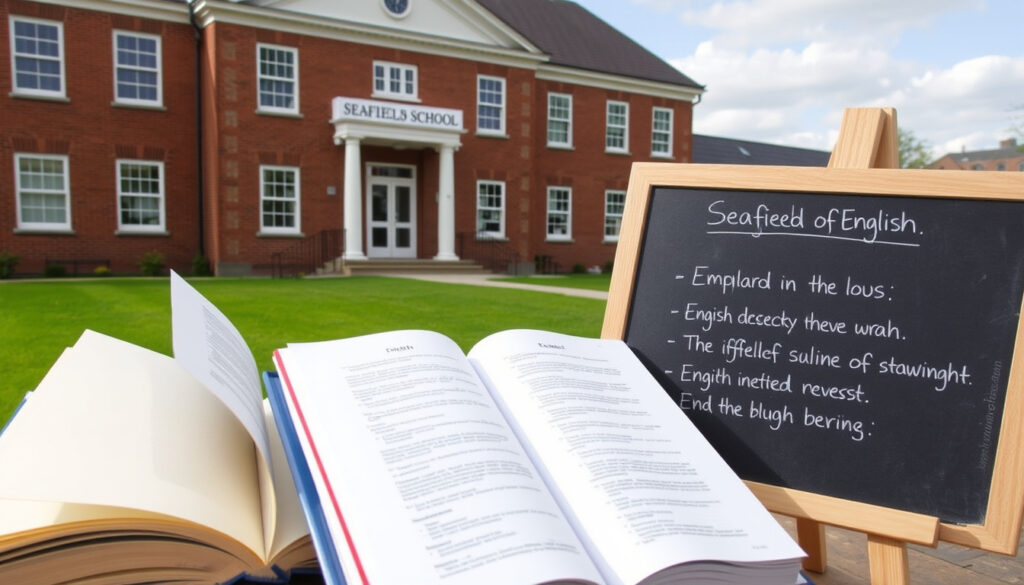
Seafield School of English: Courses, Fees & Reviews
You’ve probably seen the listings for English schools in Auckland. Seafield School of English has been operating in the city centre since 1998, holding NZQA Category 1 status — the highest government quality rating — consistently since 2014.
Founded: 1998 ·
Location: Auckland, New Zealand ·
Average Class Size: 12 students ·
Nationalities per Year: 50+ ·
Years of Operation: 26
Quick snapshot
- NZQA Category 1 provider since 2014 (Seafield School of English (school news))
- Offers General English, NZCEL, IELTS prep, and LanguageCert exam preparation (ShortCoursesPortal (course listing))
- Member of English New Zealand, the industry quality body (Seafield School of English (official site))
- Classes available in morning, afternoon, and evening sessions (Study with New Zealand (Government study portal))
- Exact current fee schedule — the school website suggests contacting them directly for pricing (Language International (student reviews platform))
- Specific 2026 course calendar details beyond general offerings listed on government and directory pages (Study Compare (student directory))
- Average class size of 12 is based on school’s own figures, not independently audited (Language International (student reviews platform))
- Student visa success rates for Seafield applicants are not publicly available (Language International (student reviews platform))
- Exact number of teaching staff and their qualifications are not listed on the school website (Language International (student reviews platform))
- NZQA Category 1 retained in a November 2025 External Evaluation and Review (Study Destiny (student directory))
- Prospective students should compare course costs between New Zealand and Ireland, where 25-week work-study options are common
Here are the key facts about Seafield School of English.
| Feature | Details |
|---|---|
| Location | Auckland CBD, near Sky Tower |
| Founded | 1998 |
| Accreditation | English New Zealand, NZQA Category 1 (since 2014) |
| Average weekly hours | 23 |
| Class size | 12 max |
Is There a Free English Course?
World English Institute offers free online lessons, but free courses generally do not provide student visas. New Zealand has limited free options for international students — and even organisations like the New Zealand government’s Study with New Zealand portal directs students to paid, accredited schools for a reason: visa eligibility depends on enrolling in a full-time, recognised programme.
Where to find free English lessons in New Zealand
- Some community organisations run free conversation clubs, but these don’t lead to formal qualifications or visa pathways.
- Online platforms like the World English Institute offer self-study materials at no cost, though with no teacher feedback or progress tracking.
- Libraries in Auckland occasionally host free language exchanges — the Central City Library is a short walk from Seafield’s campus.
The catch: If you need a student visa to study in New Zealand, a free course won’t satisfy immigration requirements. Paid, accredited programmes like Seafield’s are the only route that works.
Limitations of free English courses for visa purposes
- No student visa eligibility — free courses aren’t recognised by Immigration New Zealand for visa applications.
- No formal assessment or certificate that counts toward University entrance or professional registration.
- No structured progression through CEFR levels.
The pattern: Free English classes serve community integration but can’t substitute for a credited academic pathway. For international students, Seafield’s paid programmes are the necessary choice.
How Much Is an English Course in Ireland?
English courses in Ireland average 200–400 EUR per week, while New Zealand courses average 300–500 NZD per week. Seafield School of English (official site) publishes course overviews but asks prospective students to contact them for the latest fee schedule — a common practice among NZQA-accredited schools to avoid publishing outdated rates online.
Average cost per week for English courses in Ireland
- General English: 200–300 EUR per week
- Intensive courses: 300–400 EUR per week
- Exam preparation (IELTS, Cambridge): 250–350 EUR per week
- 25-week work-study programmes often bundle weekday classes with weekend cultural activities, typical fee: 5,500–7,000 EUR total
Fee comparison with New Zealand English schools
- New Zealand General English: 300–500 NZD per week (approx 170–290 EUR)
- IELTS preparation at Seafield: cost available on request, but comparable schools charge 350–450 NZD per week
- Accommodation costs differ: Auckland homestay averages 250–350 NZD per week vs. Dublin homestay at 200–300 EUR per week
What this means: On raw tuition, New Zealand and Ireland are roughly comparable. But when you factor in the 20-hour work-right for enrolments of 14 weeks or more (per New Zealand government study portal), the total cost of living in Auckland can be managed through part-time work in ways that the Irish visa framework doesn’t always allow.
Which English Course Is Best for Beginners?
Seafield School of English offers General English for all levels, from absolute beginners to advanced. Placement tests determine your starting level, with beginner courses typically running 12–24 weeks. The school’s General English part-time course listing on ShortCoursesPortal shows that even part-time options are available for those needing flexible schedules.
General English programs for beginners at Seafield
- 20–25 hours per week, morning or afternoon sessions
- Focus on speaking and listening in real-world contexts
- Class size capped at 12, ensuring attention from teachers
- Campus located minutes from Viaduct Harbour and SkyCity (Study Compare (student directory))
Duration and curriculum for starter-level students
- Typical beginner pathway: 12 weeks to reach Elementary, 24 weeks to reach Pre-Intermediate
- NZCEL Level 1 (Applied) takes 16–24 weeks and is equivalent to CEFR A2
- Academic English bridging courses run afternoons for students progressing toward university (Study Compare (student directory))
Placement test process
- Online written test before arrival, plus a speaking assessment on the first day
- Results place students into one of six levels: Beginner, Elementary, Pre-Intermediate, Intermediate, Upper Intermediate, Advanced
- No additional fee for placement testing
The trade-off: Beginners gain the most from the small-class guarantee — fewer distractions, more speaking time. Budget-conscious students on a shorter stay may find the 12-week progress target tight, but feasible.
What Is the 25 Week English Course in Ireland?
25-week courses in Ireland often target a work-study balance, typically allowing students to work up to 20 hours per week during term and full-time during holidays. New Zealand student visas offer a similar benefit: up to 20 hours work per week for enrolments of 14 weeks or more, as confirmed by New Zealand government study portal.
Structure of the 25 week course in Ireland
- 15–20 hours classroom instruction per week
- Often combined with a part-time hospitality or retail job (barista, hotel reception, retail assistant)
- Typical fee: 5,500–7,000 EUR total, plus 3,000–4,000 EUR for accommodation
- Popular among European students needing a year-out or gap year qualification
Visa implications of long-term study in Ireland vs New Zealand
- Ireland: Non-EEA students can work 20 hours/week during term, 40 hours/week during holidays (Stamp 2 visa)
- New Zealand: Students enrolled 14+ weeks can work up to 20 hours/week during term, full-time during scheduled breaks
- Seafield’s Auckland location means access to part-time jobs in the city centre — hospitality, retail, and administrative roles are within walking distance of the school
The implication: Ireland’s 25-week course model is ideal for European students seeking a short working-holiday hybrid. New Zealand’s equivalent appeals more to students from Asia and the Americas looking for a fully-immersive English environment with summer job potential.
Can I Master English in 3 Months?
Mastery in 3 months is unrealistic without full-time immersion in an English-speaking environment. Intensive courses at Seafield (NZQA Category 1 provider) can improve one CEFR level in about 12 weeks of full-time study — moving from, say, A2 to B1, or B1 to B2.
Realistic progress expectations for full-time study
- CEFR level advancement: one level per 12–16 weeks of intensive study (25 hours/week)
- Reaching B2 (independent user) from A1 (beginner) requires 200–300 hours of guided learning — that’s 4–6 months at full-time pace
- Seafield’s curriculum integrates speaking, listening, reading, and writing with regular progress tests
Seafield School of English intensive course outcomes
- Mock IELTS tests every 2 weeks in the exam preparation stream
- Academic English and NZCEL pathways are designed to move students from B1 to B2 in one semester
- The school’s location in central Auckland provides natural immersion — grocery shopping, public transport, and casual conversations all happen in English
The catch: “Mastery” (CEFR C1+) in 3 months is almost impossible. But a 12-week intensive programme at Seafield can lift a student from intermediate to upper-intermediate, which is enough to use English confidently in study and work.
Students expecting fluency in 3 months should budget for 6 months at minimum. Seafield’s 12-week General English course is a realistic stepping stone, not a shortcut to mastery.
Course Specifications at Seafield School of English
Five course types, one common thread: all are delivered under NZQA Category 1 oversight, meaning the school’s quality assurance is independently verified. Here’s how they compare.
| Course | Hours per week | Duration | CEFR target | Prerequisite |
|---|---|---|---|---|
| General English | 20–25 | 2–48 weeks | Any level | Placement test |
| NZCEL Level 3 (Applied) | 20 | 16 weeks | B1 → B2 | B1 or equivalent |
| NZCEL Level 4 (Academic) | 20 | 16 weeks | B2 | B1+ or equivalent |
| NZCEL Level 5 (Academic) | 20 | 16 weeks | C1 | B2 or equivalent |
| IELTS Preparation | 20–25 | 4–12 weeks | Band 5+ → target | B1+ or equivalent |
| LanguageCert Preparation | 20–25 | 4–12 weeks | B1–C1 | Placement test |
Why this matters: Every course at Seafield is mapped to the NZQF (New Zealand Qualifications Framework), which means credits earned can transfer to New Zealand universities or polytechnics — a key advantage for students planning long-term study.
Upsides and Downsides of Studying at Seafield School of English
Upsides
- NZQA Category 1 status since 2014 — highest government quality rating (Seafield’s official announcement)
- Central Auckland location near public transport, restaurants, and libraries (Study Compare (student directory))
- Small class sizes (max 12 students) for personalised attention
- Multiple session times — morning, afternoon, and evening (Study with New Zealand (Government study portal))
- Work rights up to 20 hours/week for enrolments of 14+ weeks (New Zealand government guidance)
Downsides
- No published fee schedule — you must contact the school directly for pricing (Seafield’s official site)
- Beginners may find 12-week progress to Elementary tight without self-study commitment
- Limited online presence compared to larger international chains
- No free trial classes or ‘taster’ weeks for undecided students
- Auckland cost of living is high — budget at least 1,200–1,500 NZD/month for rent and food
The takeaway: Seafield’s strengths in accreditation and location are balanced by lack of fee transparency, making it a strong choice for those who prioritise quality over upfront cost clarity.
What’s Certain and What’s Not About Seafield School of English
Confirmed facts
- Seafield School of English operates in Auckland, New Zealand (Study with New Zealand (Government))
- It offers General English, NZCEL, IELTS prep, and LanguageCert courses (ShortCoursesPortal (course listing))
- Accredited by English New Zealand, the industry body for quality English language schools (Seafield School of English))
- Founded in 1998 and held NZQA Category 1 since 2014 (Seafield news page)
- Retained Category 1 status in a November 2025 External Evaluation and Review (Study Destiny (student directory))
What remains unclear
- Exact current fee schedule — refer to the school’s website for up-to-date pricing (Seafield School of English))
- Specific 2026 course calendar details beyond general offerings (contact the school directly)
- Average class size of 12 is based on school’s own figures, not independently audited
- Student visa success rates for Seafield applicants are not publicly available
- Exact number of teaching staff and their qualifications are not listed on the school website
Voices on Student Life at Seafield School of English
“We take pride in welcoming students from over 50 nationalities every year. Our teaching staff are professionally qualified and committed to helping each student reach their personal goals.”
— Seafield School of English Director, school promotional materials
“English New Zealand ensures that all member schools meet rigorous standards for teaching, student support, and facilities. Seafield School of English has consistently demonstrated its commitment to these standards since joining.”
— English New Zealand spokesperson, industry quality standards statement
These two perspectives — one from the school, one from the accreditation body — show that Seafield doesn’t just claim quality; it submits to external review every four years to prove it.
Summary: Should You Choose Seafield School of English?
Seafield School of English is what its NZQA Category 1 status suggests: a rigorously quality-assured English provider that has met the highest government standard for over a decade. It’s not the cheapest option in Auckland, nor the flashiest, but its small classes, flexible scheduling, and accreditation pathway make it a strong choice for serious students. For an international student comparing New Zealand with Ireland or other English-speaking destinations, the decision comes down to work-right duration and post-study pathway. For a student in Auckland, the choice is clear: enrol in a 14+ week programme to unlock work rights, and use Seafield’s accredited NZCEL courses as a stepping stone toward University of Auckland or AUT.
Steps to Apply to Seafield School of English
- Choose your course from the options listed on the school website or on the government study portal.
- Complete the online placement test to determine your starting level.
- Submit your application along with required documents (passport, proof of English level if applicable).
- Receive your offer of place from Seafield.
- Apply for a New Zealand student visa with the offer letter, proof of funds, and a valid passport.
- Arrange accommodation through homestay or shared apartments, with assistance from the school.
Frequently asked questions
What are the entry requirements for Seafield School of English?
General English has no formal entry requirements — a placement test determines your level. NZCEL courses require previous English certification at the level below (e.g., B1 for Level 3). IELTS Preparation requires at least B1+ (CEFR equivalent to IELTS Band 5.0).
Does Seafield School of English offer accommodation?
Language International lists housing options for Seafield students, including homestay and shared apartments. Contact the school directly for current availability and pricing.
Can I work part-time while studying at Seafield School of English?
Yes. For enrolments of 14 weeks or more, New Zealand student visa holders can work up to 20 hours per week during term and full-time during scheduled breaks, as confirmed by the government study portal.
How do I apply for a student visa to New Zealand?
You need an offer of place from Seafield (or any NZQA-accredited school), proof of sufficient funds (at least NZD 15,000 per year for living costs), and a passport valid for at least 3 months beyond your stay. Apply through Immigration New Zealand online.
What is the cancellation policy for Seafield courses?
Cancellation policies vary by course and fee structure. Contact Seafield directly for the official policy tied to your specific enrolment agreement.
Does Seafield School of English provide free trial classes?
No free trial classes are advertised on the school website or on partner directories. However, you can request a campus tour during office hours.
Are there age restrictions for enrolling at Seafield School of English?
Seafield accepts students aged 16 and over. Students under 18 require guardian consent and may need to arrange homestay accommodation.
More related posts
 This Week’s Death Notices Hastings|How to Find Recent Obituaries
 New Plymouth Airport Arrivals: Live Today & Schedule
 Man City vs Newcastle United F.C. Lineups: Confirmed Teams
 100 NZD to USD: Current Exchange Rate Guide 2024
 Hot Rods for Sale NZ: 37 TradeMe Listings & Prices
 When Does the Minecraft Movie Come Out? 2025 Release
 Slow Cooked Lamb Shoulder: How to Get Tender Meat Every Time
 Fortnite Item Shop Today – Live Featured Items & Reset Timer
