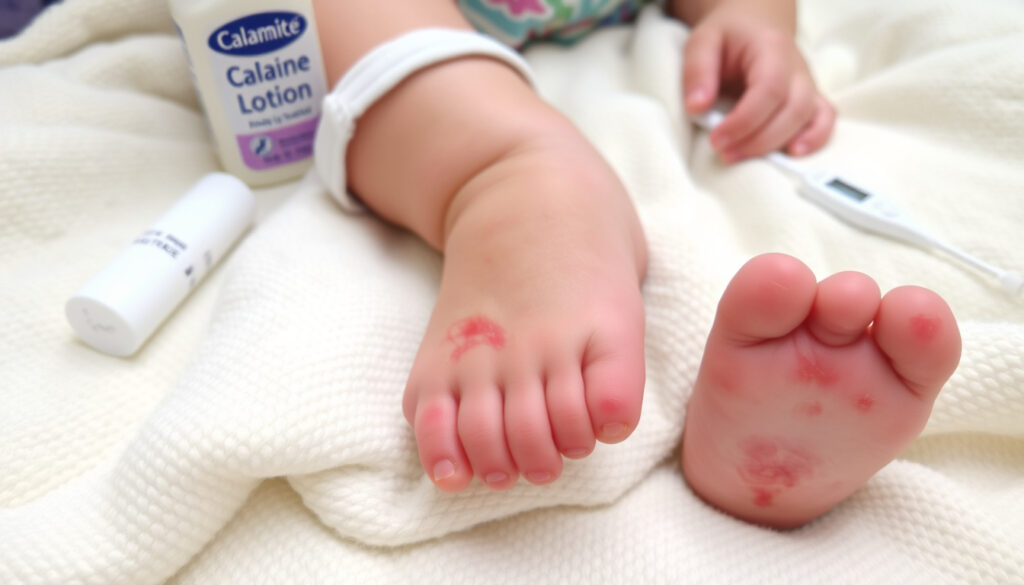
Hand, Foot, and Mouth Symptom : Early Sign and Treatment
Few things worry a parent more than seeing their child break out in a painful rash with a fever — especially when the cause isn’t immediately clear. Hand, foot, and mouth disease (HFMD) is one of those common childhood illnesses that often catches families off guard, yet most cases resolve on their own within a week to ten days, and knowing the typical timeline and signs can help you decide when to stay home, when to see a doctor, and how to keep everyone comfortable.
Incubation period: 3 to 7 days ·
Duration of symptoms: 7 to 10 days ·
Most common age group: Children under 5 years ·
Contagious period: From onset of symptoms until blisters heal (usually 7–10 days)
Quick snapshot
- Exact risk of transmission from adults to others
- Duration of immunity after infection
- Effectiveness of specific over-the-counter mouth rinses
- Whether HFMD is the same as foot-and-mouth disease in livestock (it is not)
- Day 0–2: Fever, sore throat, reduced appetite (Northwestern Medicine)
- Day 1–3: Painful mouth sores appear (Intown Pediatrics)
- Day 3–5: Rash on hands, feet, and buttocks (Northwestern Medicine) (Northwestern Medicine)
- Day 7–10: Symptoms resolve (CDC) (Northwestern Medicine)
- Most recover in 7–10 days without treatment (CDC) (UnityPoint Health)
- Watch for dehydration signs (UnityPoint Health)
- Keep children home until fever-free and blisters heal (CDC) (UnityPoint Health)
The key facts about HFMD break down into incubation, symptoms, and contagiousness.
| Fact | Details |
|---|---|
| Incubation period | 3 to 7 days |
| First symptom | Fever often appears first |
| Typical rash location | Palms, soles, and sometimes buttocks |
| Contagious period | From onset of symptoms until blisters are fully healed |
| Treatment | Supportive care (pain relief, hydration) |
What are the very first signs of hand, foot, and mouth?
What are the early symptoms in children?
- Fever is often the first symptom, lasting 1–2 days (UnityPoint Health)
- Sore throat and reduced appetite follow (CDC)
- Painful mouth sores appear after fever, inside the cheeks, tongue, and gums (Northwestern Medicine)
- A skin rash on the palms of hands and soles of feet develops a day or two later (AMA)
What are the first signs of HFMD in adults?
- Adults often experience milder symptoms or none at all (CDC)
- When present, symptoms start with fever, body aches, and sore throat (AMA)
- Adults with weakened immune systems may have more severe rash and flu-like symptoms (CDC)
How do symptoms progress day by day?
A typical day-by-day pattern in children:
- Day 0–2: Fever, sore throat, runny nose, feeling tired (Northwestern Medicine)
- Day 1–3: Painful mouth sores appear on tongue, cheeks, and gums (Intown Pediatrics)
- Day 3–5: Rash develops on hands, feet, and sometimes buttocks (Northwestern Medicine)
- Day 7–10: Symptoms resolve; contagious until blisters fully heal (CDC)
The pattern: mouth sores often heal before the skin rash disappears, and the rash on hands and feet can linger up to 10 days (UnityPoint Health).
For parents, the first 48 hours are the most uncomfortable — fever and mouth pain hit hardest. After day 3, the rash confirms the diagnosis and recovery begins, but the child remains contagious until the last blister heals.
The implication: planning for the first two days can ease the worst of the illness.
What is the contagious period of hand foot and mouth?
How long is hand, foot and mouth contagious?
The virus spreads from the moment symptoms start until the blisters have fully crusted over or healed — usually about 7 to 10 days (CDC). Contagiousness is highest during the first week of illness (Duke Health).
When is it most contagious?
- The virus is shed in saliva, nasal mucus, stool, and fluid from blisters (Duke Health)
- Peak shedding occurs in the first 3–5 days of symptoms (Intown Pediatrics)
- The virus can survive on surfaces for several days, so cleaning toys and counters matters (CDC)
Do parents need to quarantine if child has hand, foot, and mouth?
- Parents are not required to quarantine, but they can still carry the virus home (CDC)
- Adults who develop symptoms should stay home until fever-free for 24 hours and blisters are healed (Duke Health)
- Children should stay home from school or daycare until the same criteria are met (CDC)
How long should adults quarantine with hand, foot, and mouth?
- Adults typically need to isolate for 7 to 10 days from symptom onset (UnityPoint Health)
- Return to work is safe once fever is gone for 24 hours without medication and all blisters have scabbed over (CDC)
The catch: even after symptoms disappear, the virus can still be shed in stool for weeks — so hand washing remains critical for the whole household (CDC).
How do you treat hand foot and mouth in children?
What medications help?
- There is no specific antiviral treatment (CDC)
- Over-the-counter ibuprofen or acetaminophen can reduce fever and pain (CDC)
- Never give aspirin to children with HFMD (CDC)
How to relieve mouth pain?
- Cold foods like ice cream, yogurt, and smoothies are soothing (Mayo Clinic)
- Avoid acidic, spicy, or salty foods that sting (UnityPoint Health)
- Mouth rinses or sprays made with lidocaine can be used for children old enough to spit (Mayo Clinic)
When to see a doctor?
- Signs of dehydration: dry mouth, no tears, decreased urine output (CDC)
- High fever lasting more than 3 days (Mayo Clinic)
- Severe headache, stiff neck, or vomiting — these could indicate complications (CDC)
Best cream for hand, foot and mouth disease?
- No prescription cream is needed for the rash; it resolves on its own (Northwestern Medicine)
- Hydrocortisone creams are not recommended and may worsen the rash (AMA)
- For itching, calamine lotion or antihistamines can help (Mayo Clinic)
Dehydration is the most common complication of HFMD in young children because mouth sores make drinking painful. Offer fluids constantly — popsicles and milk count.
The key: treating symptoms early reduces the risk of dehydration.
What gets mistaken for hand, foot, and mouth?
Three conditions that look similar but differ in rash location and pattern:
| Condition | Rash location | Key differences |
|---|---|---|
| Chickenpox | Trunk, face, scalp — spreads to arms and legs | Lesions are itchy, not painful; appear in crops; fever higher and longer (Mayo Clinic) |
| Herpes simplex | Genitals or around mouth (cold sores) | Lesions are on genital or oral mucosa, not on hands or feet; often tingling before outbreak (Mayo Clinic) |
| Food allergy | Anywhere, often widespread hives | Hives are raised, red, and itchy — not fluid-filled blisters; appear minutes to hours after eating allergen (Mayo Clinic) |
| HFMD | Palms, soles, buttocks; mouth ulcers | Rash is flat or raised red spots with small blisters; mouth ulcers are painful, on tongue and cheeks (CDC) |
The trade-off: because chickenpox and HFMD can both cause fever and blisters, doctors rely on rash location — HFMD sticks to the hands, feet, and mouth, while chickenpox hits the trunk first.
How likely are adults to catch hand, foot, and mouth?
Can adults get HFMD?
- Yes, but many have mild or no symptoms (CDC)
- Transmission usually comes from their own infected children (AMA)
Is hand, foot and mouth dangerous for pregnancy?
- HFMD is generally mild in pregnant women, but any fever during pregnancy should be discussed with a doctor (CDC)
- There is no evidence that HFMD causes birth defects (Northwestern Medicine)
- Pregnant women should practice strict hand hygiene if exposed (CDC)
What are the first signs of HFMD in adults?
- Adults may get a more extensive rash, fever, and body aches (AMA)
- Fever is often higher and fatigue more pronounced than in children (Intown Pediatrics)
The pattern: adults who do get sick tend to feel worse than kids, but the illness still resolves in 7–10 days without specific treatment (CDC).
Treatment steps for hand, foot, and mouth
- Manage fever and pain: Give acetaminophen or ibuprofen as directed. Never use aspirin.
- Soothe mouth sores: Offer cold, soft foods and avoid citrus, tomatoes, and salty snacks.
- Push fluids: Water, milk, popsicles, and formula. Watch for dehydration signs.
- Care for the rash: Keep blisters clean and dry. Do not pop them.
- Isolate: Keep child home until fever-free for 24 hours and all blisters have scabbed.
- Clean surfaces: Disinfect toys, doorknobs, and counters regularly.
Each step — from pain relief to isolation — plays a role in both comfort and containing the virus. The key: even if your child feels better by day 5, they may still be contagious.
Timeline of hand, foot, and mouth symptoms
| Day | What happens |
|---|---|
| Day 0–2 | Fever, sore throat, runny nose, reduced appetite (Northwestern Medicine) |
| Day 1–3 | Painful mouth sores on tongue, cheeks, and gums (Intown Pediatrics) |
| Day 3–5 | Rash on hands, feet, and sometimes buttocks (Northwestern Medicine) |
| Day 7–10 | Symptoms resolve; contagious until blisters fully heal (CDC) |
Why this matters: knowing the stage helps parents anticipate when the worst pain and most contagious period will occur — and plan work leave accordingly. Mouth sores peak before the rash, so staying on top of hydration early reduces the risk of hospital visits.
Clarity: What’s confirmed and what’s still unclear
Confirmed facts
- HFMD is caused by coxsackievirus (CDC)
- Incubation period is 3–7 days (CDC)
- Fever and mouth sores are early signs (CDC)
- Contagious from onset until blisters heal (CDC)
- Most cases resolve without treatment in 7–10 days (CDC)
What’s unclear or commonly misunderstood
- Exact risk of transmission from adults to others in household
- Duration of immunity after infection — reinfection is possible (AMA)
- Effectiveness of specific over-the-counter mouth rinses for pain relief
- Some believe HFMD is related to foot-and-mouth disease in livestock — it is not (CDC)
- Some think only children get it — adults are susceptible, though often asymptomatic (CDC)
The bottom line: most facts are well-established, but some areas remain uncertain.
What experts say about hand, foot, and mouth
“HFMD is a common illness in children, usually mild and self-limiting.”
Centers for Disease Control and Prevention (U.S. public health agency)
“Hand, foot and mouth disease is a common infection that causes mouth ulcers and spots on the hands and feet.”
“Hand-foot-and-mouth disease often causes a rash of painful, blister-like lesions on the soles of the feet.”
Mayo Clinic (research hospital)
These expert statements reinforce the standard medical understanding of HFMD.
What this means for you
Hand, foot, and mouth disease is almost always a mild, self-resolving illness — but it creates real disruption for families, especially when adults get sick. For parents, the decision is clear: keep your child home until fever-free and blisters have healed, or risk spreading it to others. For caregivers, the trade-off is between comfort and contagion: treat symptoms aggressively in the first three days, but don’t drop isolation early. The virus does not negotiate on timing.
Frequently asked questions
Can hand, foot and mouth disease recur?
Yes. According to the American Medical Association, people can catch HFMD more than once because multiple viruses (different coxsackievirus strains) can cause it (AMA).
Is there a vaccine for HFMD?
No vaccine is currently available in the United States. Hand hygiene and avoiding contact with infected individuals are the best prevention (CDC).
Can adults spread HFMD to other adults?
Yes. The virus spreads through saliva, mucus, stool, and blister fluid. Adults who are infected — even without symptoms — can transmit it to others (Duke Health).
How is HFMD diagnosed?
Doctors usually diagnose HFMD based on the pattern of fever, mouth sores, and rash. Lab tests are rarely needed (Mayo Clinic).
Should I pop the blisters?
No. Popping blisters increases the risk of bacterial infection and spreads the virus. Let them heal naturally (Northwestern Medicine).
Can my child go to school with HFMD?
No. Children should stay home until they have been fever-free for 24 hours (without fever-reducing medicine) and any open blisters have dried or crusted (CDC).
What should I do if I am pregnant and exposed to HFMD?
Contact your obstetrician. While HFMD is typically mild in pregnancy, fever should be managed and any concerns discussed. No evidence shows harm to the baby (CDC).
These answers cover the most common concerns for parents and caregivers.
More related posts
 What Is a Resume Summary? Definitive Guide With Examples
 Simon Dallow New Wife: Facts About Louise Colenbrander
 Where Is My Husband by RAYE: Lyrics, Release, Charts
 Things to Do in Gold Coast, Queensland: Top Attractions
 New Zealand Minimum Wage 2026: Rates Per Hour and Types
 How to Change Fisher & Paykel Fridge Filter: Replacement Guide
 How Far is 10000 Steps – Distance, Time, Calories Guide
 Australian to NZ Dollar – Live Rate and Trends
