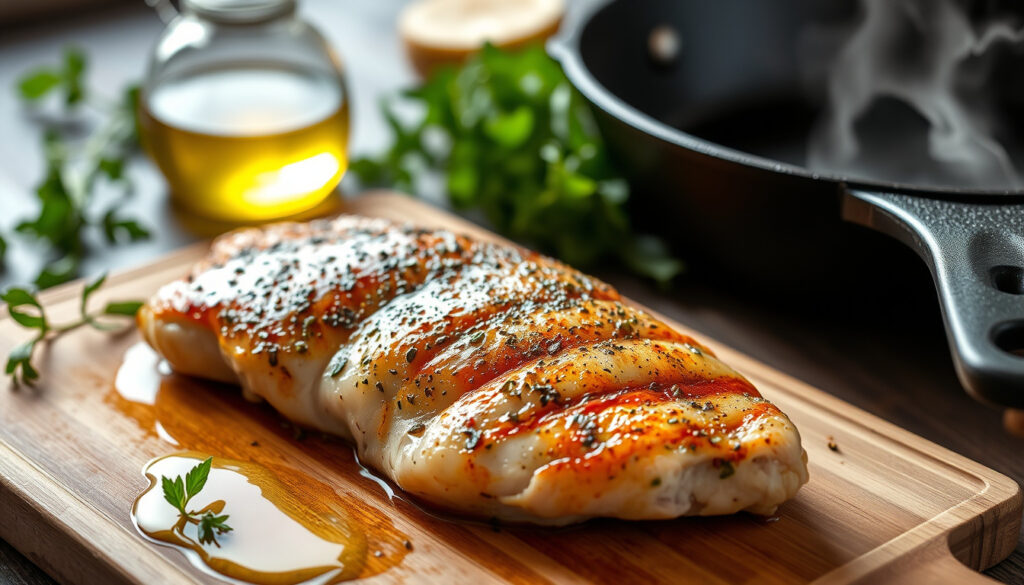
How to Cook Chicken Breast: Best Methods & Health Guide
There’s a reason chicken breast is a staple in so many kitchens: it’s lean, versatile, and goes with just about anything. But anyone who’s ended up with a dry, rubbery piece knows the challenge. This guide walks through the most reliable methods—pan-searing, oven-baking, air frying, and poaching—along with practical health considerations for managing diabetes, gallstones, and high cholesterol. By the end, you’ll know exactly how to get a juicy, safe, and diet-friendly chicken breast every time.
Safe minimum internal temperature: 165°F (74°C) ·
Average cooking time at 200°C (400°F): 20–25 minutes ·
Number of calories per 100g (skinless, baked): 165 kcal ·
Protein content per 100g: 31 g ·
Cholesterol per 100g: 85 mg
Quick snapshot
- 165°F (74°C) internal temperature required by USDA (Healthline, a trusted health information publisher)
- Cooking times vary with breast thickness – always use a thermometer (Medical News Today, a reputable medical news site)
- A digital thermometer gives instant doneness reading – crucial for food safety (Steak Medium Rare Temp – temperature control guide)
- Pair with non-starchy vegetables and whole grains for a balanced meal (How to Cook Brussel Sprouts – perfect side dish)
Five key numbers capture the essentials of cooking chicken breast safely and nutritiously.
| Fact | Value |
|---|---|
| Safe internal temperature | 165°F (74°C) |
| Resting time after cooking | 5 minutes |
| Typical cooking time (200°C oven) | 20–25 minutes |
| Calories per 100g (baked, skinless) | 165 kcal |
| Protein per 100g | 31 g |
What is the best way to cook chicken breast?
Choosing the right cooking method
- Pan-searing with a quick oven finish yields the juiciest results, especially for thicker cuts (Liv Hospital, a healthcare provider).
- Brining or marinating improves moisture retention – a simple 30-minute saltwater soak makes a noticeable difference (Medical News Today).
- Using an instant-read thermometer ensures doneness without overcooking, which is the single biggest factor in avoiding dry meat.
How to prevent dryness
- Cook to exactly 165°F (74°C) – every degree beyond that pushes moisture out.
- Let the meat rest for 5 minutes after cooking; this allows juices to redistribute.
The implication: the best method depends on your schedule and equipment, but the principles of heat control and temperature checking apply universally.
How to cook chicken breast in a pan?
Step-by-step pan-searing instructions
- Season the breast and add a thin layer of oil (olive oil or avocado oil) to a heavy skillet over medium-high heat.
- Cook 5–8 minutes on the first side without moving – this creates a golden crust.
- Flip and cook 4–6 minutes on the second side.
- Check internal temperature; it must reach 165°F (74°C).
- Rest for 5 minutes before slicing.
Adding a sauce after searing
- Deglaze the pan with a splash of low-sodium broth or lemon juice after removing the chicken.
- Simmer for 1–2 minutes, scraping up browned bits, then pour over the chicken.
- For a creamy sauce, stir in a spoonful of plain Greek yogurt – it adds richness without heavy cream (Liv Hospital).
What this means: pan-searing gives you a flavorful crust and the flexibility to build a quick sauce, all within 15 minutes of active cooking.
How to cook chicken breast in the oven?
Oven temperature and timing guide
- At 200°C (400°F), bake a standard 200g breast for 20–25 minutes until the internal temperature reaches 165°F.
- At 180°C (350°F), extend the time to 25–30 minutes.
- For a Parmesan crust: preheat to 450°F (232°C), coat strips in yogurt then breadcrumb-Parmesan mix, and bake 15–20 minutes to 165°F (BUILD A HEALTHY MEAL YouTube channel).
Fan oven adjustments
- Fan (convection) ovens circulate hot air, reducing cooking time by about 10%.
- Check with a thermometer 5 minutes before the conventional time ends to avoid overcooking.
The pattern: lower temperatures need longer time but offer more forgiveness; higher temperatures create a crisper exterior but require precise timing.
Is grilled chicken breast good for high cholesterol?
Chicken breast vs. red meat in cholesterol management
- Skinless chicken breast contains about 85 mg of cholesterol per 100g – significantly less than red meats like beef or pork.
- The American Heart Association recommends replacing red and processed meats with poultry to reduce saturated fat intake.
- Removing the skin cuts saturated fat by more than half.
Grilling vs. frying: fat content
- Grilling without added oil keeps saturated fat minimal – cooking spray or a light brush of olive oil is enough.
- Frying, especially deep-frying, adds significant fat and caloric density, which can negatively affect cholesterol levels (Liv Hospital).
- Pair grilled chicken with vegetables and whole grains for a heart-healthy meal.
The catch: grilling is excellent for cholesterol management only if you avoid charring (which can produce harmful compounds) and skip high-fat marinades.
Can a diabetic eat baked chicken?
Baked chicken as part of a diabetic diet
- Baked chicken breast has negligible carbohydrates and does not raise blood glucose.
- Avoid sugary sauces and breading – these can turn a lean protein into a carb-heavy dish.
- Pair with non-starchy vegetables (broccoli, spinach, bell peppers) and healthy fats (avocado, olive oil) for balanced blood sugar response (Liv Hospital).
Impact on blood sugar
- Protein-rich meals slow gastric emptying, which can blunt post-meal glucose spikes (Medical News Today).
- Using low-sodium broth or herbs for flavor instead of sugar-laden sauces keeps the meal diabetes-friendly.
Why this matters: chicken breast is one of the safest proteins for diabetes management, but the cooking method and accompaniments determine whether it stays beneficial.
Four methods, one pattern: the best choice depends on whether your priority is speed, texture, or dietary restrictions.
| Method | Cooking time | Fat used | Best for | Difficulty |
|---|---|---|---|---|
| Pan-seared | 10–14 min | Oil (1–2 tbsp) | Crispy exterior, quick dinner | Easy |
| Oven-baked | 20–30 min | Minimal (spray or brush) | Hands-off, large batches | Easy |
| Air fried | 12–18 min | Oil spray | Crispy without deep frying | Easy |
| Poached | 15–20 min | None | Ultra-juicy, shredding | Very easy |
Upsides
- Chicken breast is a lean protein that supports heart health and blood sugar stability (Healthline).
- Multiple cooking methods (baking, grilling, poaching) allow flexibility for different dietary needs (Liv Hospital).
- Versatile – pairs with nearly any vegetable or grain (Medical News Today).
- Quick cooking times fit busy schedules.
Downsides
- Easily overcooked and becomes dry. (Healthline)
- Cooking times vary greatly with thickness, requiring a thermometer for consistency.
The core steps for each method are outlined below.
| Method | Key steps |
|---|---|
| Pan-seared | Season → Heat oil → Sear 5-8 min → Flip 4-6 min → Rest 5 min |
| Oven-baked | Preheat oven to 200°C → Place on baking sheet → Bake 20-25 min → Check temp → Rest |
| Air fried | Preheat air fryer to 190°C → Lightly oil → Cook 12-18 min, flip halfway → Check temp |
| Poached | Simmer broth → Add chicken → Cook 15 min → Rest in liquid 5 min |
What’s confirmed, what’s unclear
Confirmed facts
- Internal temperature of 165°F (74°C) is required by USDA (Healthline).
- Chicken breast is low in carbohydrates and suitable for diabetic diets.
- Skinless chicken breast is lower in saturated fat than red meat.
What’s unclear
- Exact cooking times vary with breast thickness – always use a thermometer.
- Optimal cooking method for gallstone patients depends on fat tolerance (baking vs. frying).
- Mild flavor requires seasoning or marinades to be satisfying.
- Skinless breast has less flavor than thigh or dark meat.
Perspectives from health authorities
Cook all poultry to a safe minimum internal temperature of 165°F as measured with a food thermometer.
USDA Food Safety and Inspection Service (cited by Healthline)
Choosing skinless chicken breast over red meat can help lower saturated fat intake for heart health.
American Heart Association (reported by Medical News Today)
Non-starchy vegetables and lean protein like chicken breast form the foundation of a diabetes-friendly meal.
American Diabetes Association (via Liv Hospital)
For anyone managing cholesterol or blood sugar, the choice is clear: skinless chicken breast cooked with minimal fat and paired with fiber-rich vegetables supports both heart health and glycemic control. Skip the fried chicken; your body will thank you.
For a comprehensive guide on achieving perfectly cooked chicken every time, check out best methods for juicy chicken breast which covers pan, oven, air fryer, and poaching techniques.
Frequently asked questions
How do I know when chicken breast is fully cooked without a thermometer?
Without a thermometer, cut into the thickest part – juices should run clear and the meat should be opaque throughout. However, color alone is not reliable; the only foolproof method is a thermometer reaching 165°F.
Can I cook chicken breast from frozen?
Yes, but it will take about 50% longer. Bake at 200°C for 30–40 minutes, or pan-sear after thawing partway in cold water. Always verify internal temperature.
Should I brine chicken breast before cooking?
Brining (soaking in salt water) for 30 minutes to 2 hours helps the meat retain moisture and improves seasoning. It’s especially useful for lean breasts that tend to dry out.
What is the best oil for pan-searing chicken breast?
Use oils with high smoke points, such as avocado oil, canola oil, or grape seed oil. Olive oil works at medium heat but can smoke at high temperatures.
How long can cooked chicken breast be stored in the fridge?
Cooked chicken breast can be stored in an airtight container in the refrigerator for 3–4 days. Reheat gently with a splash of broth to prevent drying.
Is it safe to eat slightly pink chicken breast?
Color is not a reliable indicator of safety. The only way to be sure is to check the internal temperature with a thermometer – it must reach 165°F regardless of color.
Can I cook chicken breast in a slow cooker?
Yes, but results can be dry unless you use a moist cooking liquid (low-sodium broth) and avoid overcooking. Cook on low for 2–3 hours, not the typical 6–8 hours, and check temperature.
Related reading
- How to Cook Brussel Sprouts – a perfect side dish for chicken breast.
- Steak Medium Rare Temp – learn temperature control for other proteins.
More related posts
 Australian PGA Championship 2025 – Full Preview and Guide
 Married at First Sight Australia 2026: Couples, Legal Drama
 Best Winter Running Gear 2025: Expert Picks for Women, Men & UK
 Is Strep Throat Contagious? How Long to Avoid Others
 Pacers vs Bucks: Prediction, Picks & Odds for NBA Rivalry
 Medicube Zero Pore Pad: Usage, Safety, Results
 The Knight and the Moth: Plot, Spice & Series Plans
 021 Phone Number NZ: What It Is & How to Look Up Unknown Callers
