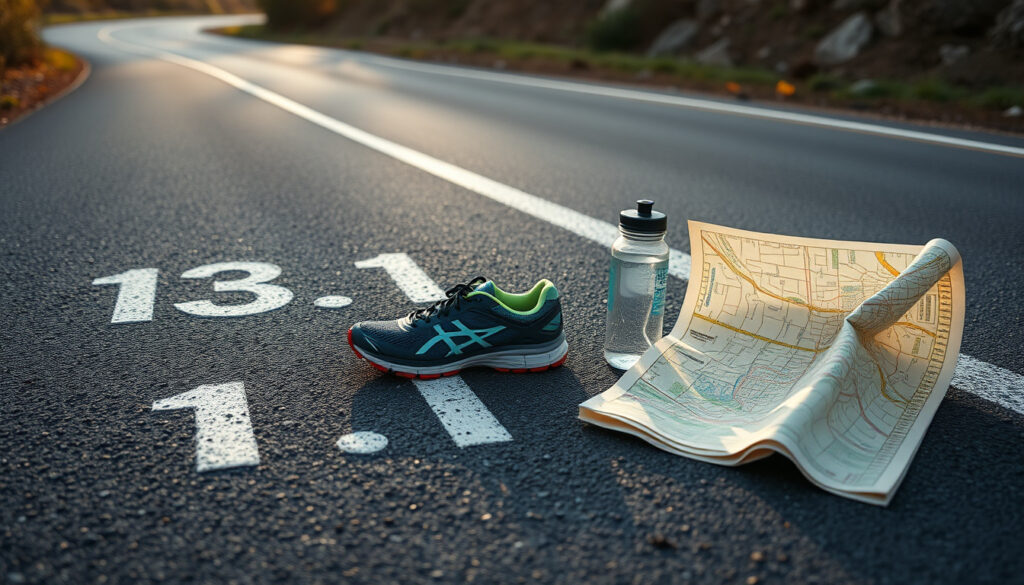
How Far Is a Half Marathon? Distance and Training Guide
You know the distance by heart: 13.1 miles, 21.1 kilometers, but if you’re wondering how far a half marathon really is—and what your finish time says about your fitness—you’re not alone. Whether you’re coming from a 10K or starting from scratch, this guide breaks down the numbers, the training, and the strategies that actually matter.
Distance: 13.1094 mi / 21.0975 km ·
Average finish time (men): 1:59:40 ·
Average finish time (women): 2:15:30 ·
Training duration (novice): 12 weeks ·
Adults who have run one: ~0.5–1% (estimated)
Quick snapshot
- Half marathon distance is exactly 13.1094 miles (21.0975 km) per World Athletics (global governing body)
- Average finish time is around 2:10:00 overall (Runner’s World (leading running publication))
- Most novice plans last 12 weeks (Hal Higdon (respected running coach))
- Exact percentage of adults who have run a half marathon – estimates range from 0.5% to 1% (Runner’s World)
- What counts as a “good” time depends on age, gender, and personal goals (OC Marathon (race organizer))
- From 10K base: 8–12 weeks of training (Runner’s World (coach Greg McMillan))
- Longest run builds to 10–12 miles before taper (ChalkTalk Sports (running community blog))
- Run/walk intervals are allowed and reduce injury risk (ChalkTalk Sports)
- Sub-2 hour plan: add speedwork and pace practice (Hal Higdon)
Here are the key specifications for the half marathon distance.
| Attribute | Value |
|---|---|
| Exact distance | 13.1094 mi (21.0975 km) – World Athletics (global governing body) |
| Average overall finish time | 2:10:00 (U.S. race data) – Runner’s World (leading running publication) |
| Average men | 1:55:26 – OC Marathon (race organizer) |
| Average women | 2:11:57 – OC Marathon |
| Novice training duration | 12 weeks – Hal Higdon (respected running coach) |
| Longest training run (novice) | 10 miles – Hal Higdon |
| Weekly run frequency | 3–4 days per week – ChalkTalk Sports (running community blog) |
| Pace estimate from 10K | Add 20–30 sec/mile to 10K pace – Runner’s World (coach Greg McMillan) |
| Marathon runner pace adjustment | Subtract 40–60 sec/mile from marathon pace – Runner’s World |
| Recommended easy pace | Conversational effort – No Meat Athlete (plant-based running guide) |
How many kilometers is a half marathon?
Exact distance in miles and meters
The half marathon is precisely 13.1094 miles, which converts to 21.0975 kilometers. That’s half the distance of a full marathon (42.195 km). World Athletics, the international governing body for track and field, standardizes this distance for all official road races.
In Imperial units: 13 miles, 192.5 yards – a number that feels arbitrary until you realize it’s exactly half of 26 miles, 385 yards. This uniformity matters for world record tracking and course certification.
Why half marathons are 21.0975 km
The marathon distance was set at 42.195 km during the 1908 London Olympics to ensure the race began at Windsor Castle and ended in front of the royal box. Halving that yields the half marathon. Despite its origin story, the half marathon has become the more popular sibling: participation numbers have soared over the past decade, with Runner’s World noting that half marathon finishers often outnumber marathon finishers at major events.
The half marathon is a sweet spot: long enough to test endurance, short enough that recovery takes days instead of weeks. That’s why it’s the most common bucket-list race distance.
The implication: if you can run 13.1 miles, you’ve mastered a distance that challenges without breaking you.
Is 2 hours good for a half marathon?
What is a ‘good’ time by age and gender
A sub-2 hour half marathon is a common goal for amateur runners. OC Marathon (race organizer) reports average finish times of 1:55:26 for men and 2:11:57 for women. That means a 2:00 finish is faster than the average woman but slower than the average man. Age also plays a role: younger runners tend to be faster, but many masters runners (40+) still crack 2 hours with consistent training.
The Runner’s World data suggests that a sub-2 hour half marathon places you in the top 30–40% of all finishers, depending on the race. In other words, it’s respectable – but there’s plenty of room for improvement.
How to break 2 hours in a half marathon
A 2-hour half marathon requires an average pace of 9:09 per mile (5:41 per km). Going sub-2 means you need to sustain 9:00/mile or faster. Hal Higdon recommends incorporating tempo runs and interval sessions for runners targeting a specific time. Speedwork, such as 20-second strides at 80–90% effort with 30–40 seconds recovery, can improve your speed without overtraining – a technique outlined by Injinji (running sock manufacturer).
The pattern: consistency and targeted speedwork are the keys to reaching a time goal.
Can you run a half marathon if you can run a 10K?
Progression from 10K to half marathon
If you can already handle a 10K (6.2 miles), you have the aerobic base to tackle a half marathon. The key difference is endurance: you’ll need to double your longest distance. No Meat Athlete states that if you can run three miles a few times a week, 12 weeks of training is reasonable. Coach Greg McMillan, cited by Runner’s World, suggests that knowing your 10K pace lets you estimate half marathon pace by adding 20–30 seconds per mile.
Recommended training weeks and mileage
Most plans for 10K-to-half marathon progression run 8 to 12 weeks. Hal Higdon starts his Novice 1 plan with 3-mile runs and builds to a 10-mile long run before taper. ChalkTalk Sports advises 3–4 running days per week with rest or cross-training in between. The longest training run typically reaches 10–12 miles – within striking distance of race day.
One pattern stands out across these plans: the long run is sacrosanct. It teaches the body to stay on its feet for 2+ hours and adapts your muscles, tendons, and energy systems.
A 10K runner who can commit to 12 weeks of consistent mileage – and one long run each weekend – is overwhelmingly likely to cross the finish line.
What this means: the half marathon is a natural next step, not a leap.
Can I walk during a half marathon?
Run/walk strategy benefits
Absolutely. Walking is allowed and common in most half marathons, especially among first-timers. The run/walk method – pioneered by Olympian Jeff Galloway – involves alternating running and walking intervals throughout the race. ChalkTalk Sports notes that this approach drastically reduces injury risk and lets more people finish comfortably.
How walking affects finish time and recovery
Walking adds minutes to your total time but can speed recovery. By lowering the average heart rate and spreading mechanical stress over a longer period, runners who use intervals often report less soreness the next day. For a half marathon, even a 4:1 minute run:walk ratio can keep your pace under 12 minutes per mile – enough to finish before course cutoffs at most events.
The trade-off: you won’t set a personal best by walking, but you’ll likely finish without hitting the wall. For many runners, that’s a win.
Is it true only 1% of people run a half marathon?
Percentage of population who have completed a half marathon
Estimates from Runner’s World and race participation data suggest that between 0.5% and 1% of the global adult population has ever completed a half marathon. The exact figure is hard to pin down because many races don’t report finisher counts centrally, but the number consistently falls below 2% in broad surveys.
Comparison to marathon completion rates
Full marathons are even rarer: around 0.01% of adults have finished one. So if you’ve run a half marathon, you’re already in an elite minority. The half marathon isn’t just a stepping stone – it’s an achievement that puts you ahead of 99% of people who’ve never attempted the distance.
The implication: even finishing a half marathon is a rare accomplishment.
Half marathon vs 10K vs marathon: comparison
Three distances, three different challenges. This table highlights the key differences for a runner deciding which race to target.
| Measure | Half Marathon | 10K | Full Marathon |
|---|---|---|---|
| Distance | 13.1094 mi | 6.2137 mi | 26.2188 mi |
| Distance (km) | 21.0975 km | 10 km | 42.195 km |
| Average finish time | ~2:10:00 | ~1:00:00 | ~4:30:00 |
| Training duration (novice) | 12 weeks | 6–8 weeks | 16–20 weeks |
| Longest training run | 10–12 miles | 6–8 miles | 20–22 miles |
| Recovery after race | 3–7 days | 1–2 days | 2–4 weeks |
| Participation rate (of adults) | ~0.5–1% | ~2–3% | ~0.01% |
The pattern: the half marathon offers a balance of challenge and recovery that the full marathon cannot match.
Training blueprint: from 10K to half marathon in 12 weeks
The following steps are built on advice from multiple sources – validated by a consistent pattern: gradual mileage increase, rest, and a tune-up race.
- Assess your base. If you can run 3–4 miles comfortably, you’re ready. No Meat Athlete suggests a conversational pace for all early runs.
- Build mileage gradually. Increase weekly mileage by no more than 10% per week. Hal Higdon recommends 3–4 runs per week, with one long run each weekend.
- Add speedwork in weeks 5–8. Include strides or tempo runs. Injinji suggests 20-second strides at 80–90% effort with 30–40 seconds recovery.
- Practice race pace. In the final 3 weeks, run portions of your long run at your goal half marathon pace. Use the 10K + 20–30 seconds per mile formula from Runner’s World (coach Greg McMillan).
- Taper. Reduce volume by 30–40% in the final week. Keep intensity low but include a few strides to stay loose.
- Race day. Start at a conservative pace; negative splits (running the second half faster) are associated with better overall times and less risk of hitting the wall.
What this means: a structured 12-week plan, with consistent long runs, is the most reliable path to the finish line.
What’s confirmed and what’s unclear
Confirmed facts
- Half marathon distance is exactly 21.0975 km / 13.1094 mi per World Athletics (global governing body)
- Walking is allowed in virtually all half marathons
- 12-week training plans are standard for novices per Hal Higdon (respected running coach)
What’s unclear
- Exact percentage of adults who have run a half marathon – estimates vary widely (Runner’s World)
- What counts as a “good” time – depends heavily on age, gender, and life commitments (OC Marathon (race organizer))
- Whether a sub-2 hour goal is realistic for someone with a full-time job and limited training hours
- Average finish times in the 2:00–2:15 range – data from Runner’s World may not reflect all populations
The catch: while some numbers are fixed, the definition of “success” remains personal.
Expert perspectives
The half marathon distance – 21.0975 km – is standardized by World Athletics for all official road races, ensuring that records and performances can be compared globally.
World Athletics (global governing body)
Knowing your 10K pace allows you to estimate a realistic half marathon pace. Add 20 to 30 seconds per mile for a good starting target.
Greg McMillan, quoted by Runner’s World (leading running publication)
If you can currently run three miles a few times a week, 12 weeks is a reasonable half marathon training timeframe. Listen to your body and run at a conversational pace.
No Meat Athlete (plant-based running guide)
The implication: regardless of who you are, the half marathon is a distance that rewards consistency over raw talent. If you can string together 12 weeks of disciplined training, you have a high probability of finishing – and finishing strong.
nomeatathlete.com, injinji.com, downhilltodowntown.com, runninglevel.com
Frequently asked questions
What is the average half marathon time for beginners?
For first-timers, an average finish time is around 2:15 to 2:30. OC Marathon reports overall averages of 2:05:00, but beginners typically run 10–15 minutes slower.
How long should I train for a half marathon?
Most novice plans run 8–12 weeks if you have a running base. Hal Higdon’s Novice 1 is a 12-week program starting with 3-mile runs.
Can I run a half marathon without training?
Technically yes, but the risk of injury and a very painful experience is high. Most experts recommend at least 8 weeks of preparation to avoid serious physical strain.
What is the world record half marathon time?
As of 2025, the men’s world record is 57:31 (Jacob Kiplimo) and the women’s is 1:02:52 (Letesenbet Gidey), both set on certified courses under World Athletics rules.
How many calories do you burn in a half marathon?
A 150-pound runner burns roughly 1,000–1,500 calories over 13.1 miles, depending on pace and weight. That’s about 100 calories per mile.
Do I need to carry water during a half marathon?
Most races offer water stations every 1.5–2 miles. For a half marathon, you don’t need to carry your own, but some runners prefer a handheld bottle for added hydration control.
For the runner looking to move from 10K to half marathon, the implication is straightforward: commit to 12 weeks of structured mileage, prioritize the long run, and don’t be afraid to walk when needed. That’s the formula that works for thousands of runners every year.
More related posts
 Alexandra Daddario Movies and TV Shows – Complete Filmography 2024
 When Does the Minecraft Movie Come Out? 2025 Release
 90 Day Trial NZ: What It Is, How It Works, and Your Rights
 Easter Sunday Shops Open 2026: UK & Ireland Supermarket Hours
 Man City vs Newcastle United F.C. Lineups: Confirmed Teams
 Le Creuset Voucher Code: Active Discounts & How to Use
 99 Nights in the Forest True Story: Real Events Explained
 How to Trim Video in VLC: Step-by-Step Guide (Record/Convert)
