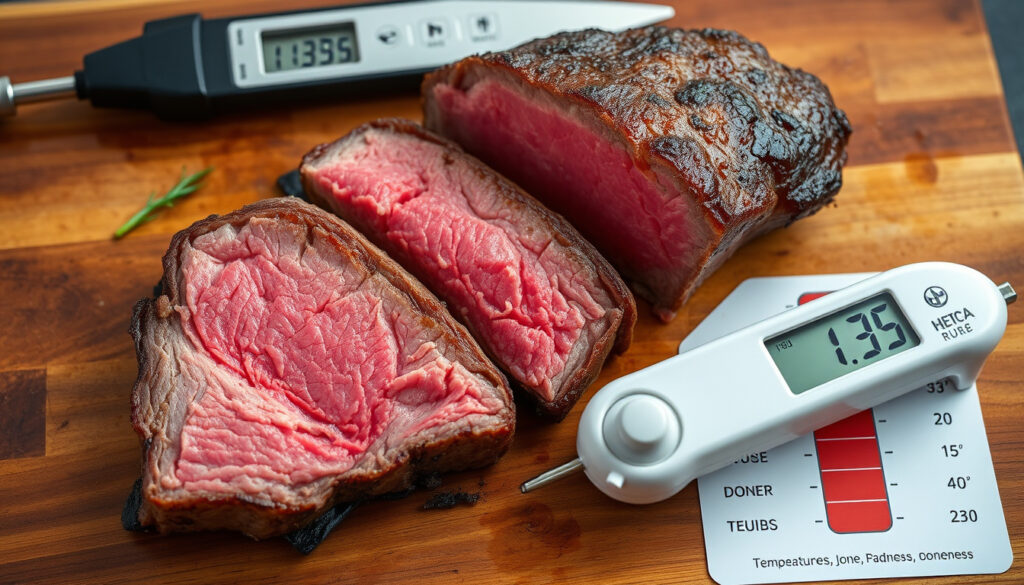
Steak Medium Rare Temp – Internal Guide with Charts
Achieving the perfect medium rare steak requires understanding exactly what internal temperature to target and how factors like carryover cooking affect final results. This guide covers the science behind temperature measurement, safety guidelines from food safety authorities, and practical tips for consistently reaching that warm, red center that steak lovers crave.
The target internal temperature for medium rare steak sits between 130-135°F (54-57°C) when measured after resting. However, many variables influence whether you hit that mark precisely, including the thickness of your cut, your cooking method, and how you account for residual heat. Getting this right separates a juicy, restaurant-quality steak from an overcooked disappointment.
Whether you’re grilling a ribeye, pan-searing a strip steak, or reverse-searing a thick tomahawk, the principles remain consistent. Understanding the difference between pull temperature and final resting temperature can transform your results overnight. Below is a comprehensive breakdown of everything you need to know about medium rare steak temperature.
What Is the Internal Temperature for Medium Rare Steak?
The internal temperature for medium rare steak is 130-135°F (54-57°C) measured in the center after resting. This range represents the point where the steak’s proteins have denatured enough to lose their raw red color while retaining enough moisture for that characteristic warm, red-pink center. According to industry standards from Certified Angus Beef, pulling the steak from heat when it reaches approximately 120-130°F accounts for the temperature rise during resting.
Key Temperature Points at a Glance
- Rare: 120-125°F pull, 125°F final after rest
- Medium Rare: 120-130°F pull, 130-135°F final after rest
- Medium: 130-140°F pull, 140-145°F final after rest
- Medium Well: 140-145°F pull, 150-155°F final after rest
- Well Done: 150°F+ pull, 160-170°F final after rest
These figures apply to whole beef cuts including steaks, roasts, veal, lamb, and bison. Ground beef requires different handling, reaching a minimum of 160°F with no resting period needed due to bacterial contamination concerns from the grinding process.
Thicker steaks over 1.5 inches require pulling 2-5°F lower than thinner cuts because they experience greater carryover cooking—temperatures can rise an additional 10-15°F during the resting period. A 2-inch ribeye pulled at 120°F might reach 135°F while resting, while a thinner cut pulled at the same temperature could end up overcooked.
Understanding Pull Temperature vs. Final Temperature
Many home cooks make the mistake of targeting the final desired temperature while the steak is still on the heat source. This leads to overcooked results because residual carryover cooking continues to raise the internal temperature after removal. Professional cooks and competition barbecuers account for this by removing meat from heat before it reaches the target temperature.
For medium rare, this means inserting your thermometer and pulling the steak when it reads approximately 120-125°F for thinner cuts or 115-120°F for thick steaks. The steak will continue cooking from its own residual heat, eventually settling at the 130-135°F medium rare range during the resting period.
| Doneness | Pull Temperature (°F) | Final After Rest (°F) | Final After Rest (°C) | Center Appearance |
|---|---|---|---|---|
| Rare | 115-125 | 125 | 52 | Cool red |
| Medium-Rare | 120-130 | 130-135 | 54-57 | Warm red |
| Medium | 130-140 | 140-145 | 60-63 | Warm pink |
| Medium-Well | 140-145 | 150-155 | 66-68 | Slightly pink |
| Well-Done | 150+ | 160-170 | 71-77 | No pink |
How to Check Steak Internal Temperature Accurately
Using a reliable instant-read or meat thermometer is essential for consistent results. The USDA explicitly states that color alone is an unreliable indicator of doneness, as myoglobin—the protein responsible for red color in beef—can remain pink even at safe temperatures or appear gray before reaching them. A quality thermometer removes guesswork and ensures food safety.
Proper Thermometer Technique
Insert the thermometer probe into the thickest part of the steak, avoiding bone, fat deposits, and contact with the cooking surface or pan. For thinner steaks under 1 inch, inserting the probe sideways into the center provides the most accurate reading. Thicker cuts benefit from a straight vertical insertion into the deepest part of the meat.
Large roasts require testing multiple locations, particularly around the center and thickest portions, to ensure uniform doneness throughout. The recommended roasting guidelines emphasize calibrating thermometers regularly for accuracy, especially after drops or extended use.
For bone-in steaks, insert the probe at least half an inch away from bone to avoid falsely elevated readings. Bone conducts heat differently and can give misleading temperature data. When in doubt, test slightly away from the bone in the thickest muscle section.
Types of Thermometers for Steak
- Instant-read digital thermometers provide readings in 2-3 seconds
- Probe-style thermometers work well for oven cooking with remote displays
- Thermometer-fork combinations allow temperature checking while turning
- Infrared thermometers measure surface temperature only, not internal
Regular calibration ensures accuracy. The ice water method—placing the probe in a mixture of crushed ice and water should read 32°F (0°C)—provides a quick verification. Some digital models include automatic calibration features, while others require manual adjustment according to manufacturer instructions.
Carryover Cooking and Resting for Perfect Medium Rare
Carryover cooking is a phenomenon where residual heat continues cooking the steak after removal from the heat source. This occurs because the outer layers are hotter than the interior, and heat conducts inward during the resting period. Understanding and planning for carryover is crucial for achieving the correct medium rare temperature without overshooting.
The Science of Carryover
Depending on cut thickness, starting temperature, and resting conditions, carryover can raise internal temperatures by 5-15°F. A thick ribeye steak pulled at 125°F might reach 135°F during a 10-minute rest, effectively moving from rare toward medium rare. Thinner steaks experience less dramatic but still significant temperature rises.
According to beef temperature guides, the ideal approach for medium rare involves pulling at 125°F, expecting the steak to rise to approximately 135°F during rest. For roasts targeting medium rare, pulling 10°F below the target is recommended—meaning removing at 130°F for a final 140°F result.
Cooking the steak to the exact target temperature on the heat source almost guarantees overcooked results. Always account for carryover by removing the steak 5-10°F below your desired final temperature. The resting period is not merely waiting time—it is an active part of the cooking process.
Proper Resting Technique
The USDA recommends a minimum 3-minute rest for steaks, updated in 2011 to align with federal food safety standards. However, most sources suggest 10-15 minutes for optimal juiciness, allowing muscle fibers to relax and redistribute internal juices throughout the meat rather than losing them immediately upon cutting.
Loosely tent the steak with aluminum foil during resting to retain heat without creating steam that can make the exterior soggy. This technique maintains the crust’s texture while allowing the interior temperature to equalize. For thicker cuts, resting times toward the longer end of the range produce more consistent results throughout the steak.
The Cooking Timeline for Medium Rare Steak
Understanding the sequence from preparation through serving helps visualize where temperature targets fit into the overall cooking process. Each stage contributes to achieving that perfect medium rare result.
- Bring to room temperature (30-45 minutes): Allow steak to rest on the counter, promoting more even cooking throughout
- Season generously: Apply salt and pepper before cooking; salt draws moisture initially but reabsorbs during cooking
- Sear first side (high heat, 2-4 minutes): Develop crust without moving; flip only once
- Sear second side (2-4 minutes): Continue to internal target temperature
- Check temperature with instant-read thermometer: Pull at 120-125°F for medium rare
- Rest the steak (10-15 minutes): Allow carryover to finish cooking and juices to redistribute
- Final temperature check (optional): Confirm 130-135°F range has been reached
- Slice and serve: Cut against the grain for optimal tenderness
Food Safety: What Temperature Is Safe for Steak?
The USDA sets the safe minimum internal temperature for whole beef cuts at 145°F (63°C) followed by a minimum 3-minute rest. This standard, updated in 2011 to match federal requirements for food service establishments, balances pathogen elimination with juiciness considerations.
Established Information
- USDA safe minimum for whole beef cuts: 145°F (63°C) with 3-minute rest
- Ground beef requires 160°F minimum with no resting requirement
- Poultry must reach 165°F throughout
- Color alone cannot reliably indicate safety or doneness
- Pathogens like E. coli are destroyed at proper temperatures
Information That Requires Personal Judgment
- Many steakhouses serve medium rare at 130-135°F, below USDA minimums
- Quality and freshness of source influence acceptable risk levels
- Individual health considerations may warrant higher temperatures
- High-risk populations should adhere strictly to USDA guidelines
The USDA food safety recommendations aim for a margin of safety that accounts for variations in cooking equipment, starting temperatures, and individual thermometers. While many culinary professionals and high-end restaurants serve beef at temperatures below these standards, the USDA guidelines represent the recommendation for home cooking.
The mandatory 3-minute rest after cooking allows for what’s called “residual kill” – continued destruction of harmful bacteria during the temperature holding period. Even after removing from heat, temperatures remain high enough to eliminate pathogens during this window, contributing to food safety without overcooking the meat.
Why Temperature Precision Matters for Steak Quality
Temperature precision directly impacts the eating experience because steak texture and juiciness depend on how proteins and fats respond to heat. At lower temperatures within the medium rare range, the muscle fibers remain more tender and retain more of their natural moisture. As temperatures climb toward medium, protein denaturation accelerates, squeezing out juices and creating a firmer texture.
The Maillard reaction that creates the savory brown crust occurs at higher surface temperatures, typically above 280°F. This chemical process between amino acids and sugars develops complex flavors that complement the meat’s natural taste. Achieving the ideal balance between crust development and interior temperature requires understanding how heat transfers through the steak during cooking.
Fat marbling within the steak also responds to temperature. Intramuscular fat renders more fully at higher temperatures, contributing to flavor but reducing juiciness retention. For premium cuts with significant marbling, slightly lower final temperatures (toward 130°F) often produce superior results compared to standard guidelines designed for leaner cuts.
“The difference between a great steak and an overcooked one often comes down to understanding carryover and resting. Pull too late, and no amount of sauce can restore what was lost.”
Summary: Key Takeaways for Perfect Medium Rare
Achieving consistent medium rare steak comes down to understanding and accounting for several interconnected factors. Target a final internal temperature of 130-135°F (54-57°C) after resting, but pull from heat at 120-125°F to account for carryover cooking that raises temperature an additional 5-15°F during the rest period.
Invest in a quality instant-read thermometer and learn proper insertion technique for different steak thicknesses. Always rest your steak for at least 3 minutes minimum, ideally 10-15 minutes, loosely tented with foil. Remember that color provides unreliable information—only temperature measurement ensures predictable results.
For more kitchen essentials, see our guide to King Size Bed Dimensions – Complete Guide with Charts or learn How to Fold Fitted Sheets Neatly – Step-by-Step Guide for other household measurement techniques that require similar precision.
Frequently Asked Questions
Can I safely eat steak at 130°F?
According to USDA guidelines, the safe minimum for whole beef cuts is 145°F. However, many restaurants and culinary professionals serve steak at 130-135°F. Higher-quality, fresh-cut beef from trusted sources presents lower risk, though the USDA recommendation prioritizes maximum safety margins.
What if I don’t have a thermometer?
Without a thermometer, touch testing provides rough estimates—rare steak feels like pressing your thumb to your nose, medium rare like touching your thumb to your index finger. However, these methods are subjective and unreliable. Purchasing an instant-read thermometer remains the best investment for consistent results.
How much does steak temperature rise during resting?
Temperature typically rises 5-15°F during resting, depending on steak thickness, starting temperature, and ambient conditions. Thicker cuts experience greater rises. Planning for this by pulling early ensures your final temperature matches medium rare specifications.
Should I use a meat thermometer for every steak?
Yes, using a thermometer every time builds consistency and confidence. While experienced cooks might estimate based on feel and timing, beginners benefit significantly from verifying temperatures. Even advanced cooks use thermometers for thick cuts where carryover calculations become complex.
Does steak thickness affect the target temperature?
The target final temperature remains constant (130-135°F for medium rare), but the pull temperature varies with thickness. Thicker steaks require pulling at lower temperatures because they experience more carryover cooking during the resting period.
Is 135°F considered medium rare?
Yes, 135°F is firmly within the medium rare range. Industry standards define medium rare as 130-135°F final internal temperature. Pulling from heat at approximately 120-125°F typically achieves this range after accounting for carryover.
How long should I rest a steak for accurate temperature reading?
The USDA recommends at least 3 minutes minimum, while 10-15 minutes provides optimal juiciness redistribution. Taking the temperature reading immediately before serving rather than during rest gives the most accurate picture of what the diner will experience.
More related posts
 021 Phone Number NZ: What It Is & How to Look Up Unknown Callers
 100 NZD to USD: Current Exchange Rate Guide 2024
 Our Father Who Art in Heaven: Full Prayer, Bible Verse & Guide
 Ready or Not 2: Release date, cast and ending explained
 Land Transfer Act 2017 – Key Changes and Impacts Explained
 Dodgers vs Milwaukee Brewers Match Player Stats – Box Score & Top Performers
 Star Wars Chronological Order: Movies & Series Timeline
 Compare Home Insurance NZ 2024: Best Rates & Providers
