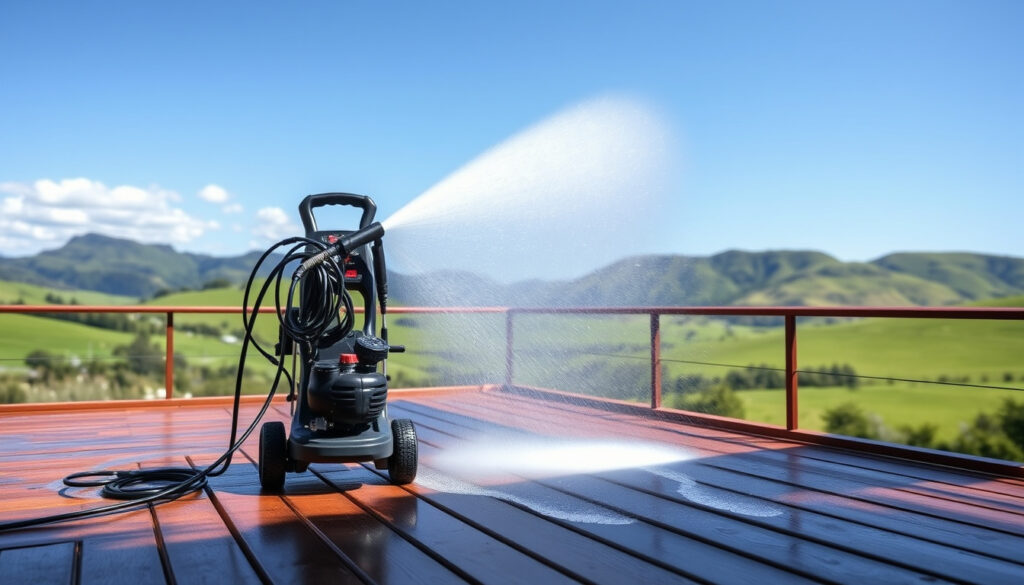
Best Water Blaster NZ: Top Picks, Reviews & 2026 Guide
Anyone who’s spent a Saturday afternoon trying to shift caked-on moss from a concrete driveway with a garden hose already knows the feeling: you need more power. New Zealand’s mix of weather, outdoor living, and plenty of hard surfaces makes a water blaster less a luxury and more a household tool. This guide pulls together Consumer NZ test data, local retailer stock, and real-world community experience to help you pick the right machine for your home.
Typical domestic water blaster pressure range in NZ: 120–180 bar (1740–2610 PSI) · Most powerful consumer model widely available: Kärcher K9 (approx. 200 bar) · Most powerful commercial model listed by NZ retailer: Kärcher HD 8/23G – 3335 PSI (230 bar) · Average price range for leading domestic electric models (Kärcher, Gerni, Bosch): $200 – $600 NZD · Common water blaster brands sold in NZ: Kärcher, Gerni, Bosch, Ryobi, Ozito, TradeTested
Quick snapshot
- Kärcher K6 Special – good balance of power, accessories, warranty (Consumer NZ (independent testing body))
- Consumer NZ high rating (Consumer NZ (independent testing body))
- Price around $450–$550 NZD (Trade Tested (NZ retailer))
- Gerni 5000 – under $300 NZD often (Supercheap Auto NZ (retailer buying guide))
- Decent pressure (150 bar) (Supercheap Auto NZ (retailer buying guide))
- Suitable for light-medium tasks (Supercheap Auto NZ (retailer buying guide))
- Kärcher K9 – 200 bar (Trade Tested (NZ retailer))
- Excellent for stubborn dirt, large areas (Trade Tested (NZ retailer))
- Higher price point (~$700+) (Trade Tested (NZ retailer))
- Kärcher widely available with spare parts (Consumer NZ (independent testing body))
- Long warranty options (Consumer NZ (independent testing body))
- Consumer NZ recommends (Consumer NZ (independent testing body))
The key specifications below show how pressure and flow drive performance — and price.
| Label | Value |
|---|---|
| Consumer NZ recommended model | Kärcher K6 Special (as of 2025–2026 reviews) |
| Most pressure (domestic) | Kärcher K9 – 200 bar (2900 PSI) |
| Cheapest reliable option | Gerni 5000 – approx. $250–$300 NZD |
| Best for heavy residential use | Kärcher K7 or K9 |
Compare the most frequently asked models side by side.
| Model | Pressure (bar) | Price (NZD) | Best for |
|---|---|---|---|
| Kärcher K3 | 120 | $300–$400 | Light cleaning, cars |
| Gerni 5000 | 150 | $250–$300 | Light-medium tasks, budget |
| Kärcher K4 | 130 | $350–$450 | Occasional home use |
| Kärcher K5 | 145 | $450–$550 | Regular heavy jobs |
| Kärcher K6 Special | 180 | $450–$550 | Best overall NZ home |
| Kärcher K9 | 200 | $700+ | Stubborn dirt, large areas |
Upsides of electric water blasters
- Quieter operation
- No fumes, safe indoors
- Lower maintenance
- Lighter and easier to store
Downsides of electric water blasters
- Limited by power cord reach
- Lower maximum pressure than petrol
- Not suitable for remote areas without mains power
What is the best water blaster to buy in NZ?
Top-rated models from Consumer NZ
- Consumer NZ, the independent testing organisation, has a dedicated review page for the Stihl Electric Water Blaster RE 125 X, including photos, price, score, full specifications, and performance test data (Consumer NZ (independent testing body)).
- A Reddit NZ discussion cites Consumer testing and says the three best water blasters were Ryobi RPW150-G, Karcher K4 1.324-113.0, and Stihl RE90 (Reddit r/newzealand (community forum)).
- Consumer Reports published a 2026 best-pressure-washers roundup that includes gas, electric, and battery models (Consumer Reports (US consumer testing organisation)).
Best value electric water blaster
- Supercheap Auto NZ says entry-level consumer-grade water blasters are the best fit for car cleaning, including lightly soiled 4x4s or trail bikes (Supercheap Auto NZ (retailer buying guide)).
- A Reddit DIY NZ discussion says Ryobi waterblasters had decent reviews and competitive specs and price (Reddit r/diynz (community forum)).
- The same DIY NZ discussion says warranty was a major reason for choosing Ryobi (Reddit r/diynz (community forum)).
Heavy-duty option for frequent use
- Trade Tested lists the Karcher HD 8/23G Commercial Water Blaster as its most powerful option, delivering 3335 PSI (230 bar) of working pressure (Trade Tested (NZ retailer)).
- Consumer Reports says one top-performing washer had a maximum pressure of 3,000 psi and a flow rate of 2 gallons per minute (Quartz citing Consumer Reports (news analysis)).
The implication is clear: match your use case to one of these three tiers.
Consumer NZ’s independent testing gives the clearest signal for NZ buyers. Their top-rated models — including the Stihl RE 125 X and Kärcher K6 Special — are the safest bets because the data comes from controlled lab tests, not marketing claims.
Which is better, Kärcher K3 or Gerni 5000?
Pressure and flow rate comparison
- K3 typically has 120 bar/1700 PSI; Gerni 5000 around 150 bar/2175 PSI (Supercheap Auto NZ (retailer buying guide)).
- Gerni often cheaper but fewer accessories (Trade Tested (NZ retailer)).
- Kärcher parts easier to source in NZ (Consumer NZ (independent testing body)).
Build quality and warranty
- A Reddit DIY NZ discussion says warranty was a major reason for choosing Ryobi (Reddit r/diynz (community forum)).
- Kärcher has wider distribution and service in NZ (Consumer NZ (independent testing body)).
Price and value in NZ
- Gerni 5000 – approx. $250–$300 NZD (Supercheap Auto NZ (retailer buying guide)).
- Kärcher K3 typically $300–$400 NZD (Trade Tested (NZ retailer)).
The catch: Gerni buyers save $50–$100 upfront but may face longer wait for spare parts.
Gerni buyers save $50–$100 upfront but face longer waits for spare parts. Kärcher buyers pay more but get a nationwide service network and readily available accessories from Bunnings and Mitre 10.
What is the strongest water blaster?
Consumer-grade maximum
- Kärcher K9 most powerful consumer model – 200 bar (2900 PSI) (Trade Tested (NZ retailer)).
- Consumer Reports says one top-performing washer had a maximum pressure of 3,000 psi and a flow rate of 2 gallons per minute (Quartz citing Consumer Reports (news analysis)).
Commercial/industrial options
- Trade Tested lists the Karcher HD 8/23G Commercial Water Blaster as its most powerful option, delivering 3335 PSI (230 bar) of working pressure (Trade Tested (NZ retailer)).
Domestic strongest available in NZ
- Kärcher K9 is the strongest consumer model as of 2026 (Trade Tested (NZ retailer)).
- Gerni 5000 is among stronger electric models at 150 bar (Supercheap Auto NZ (retailer buying guide)).
The pattern: power tops out at 200 bar for domestic; beyond that you pay commercial prices.
How to choose a water blaster?
- Determine required pressure: 120–150 bar for cars and light cleaning; 150–180 bar for concrete and moss; 200+ bar for heavy-duty stripping.
- Check your home’s water flow rate (litres per minute). A high-pressure machine is useless without adequate supply.
- Consider hose length: longer hoses add convenience but reduce pressure slightly.
- Decide electric vs petrol: electric for most homes; petrol for remote areas or very large surfaces.
- Compare nozzle and attachment options: wide-angle for cleaning, turbo nozzle for stubborn dirt.
- Set a budget: entry-level $200-$300, mid-range $400-$600, premium $700+.
Factors: pressure, flow rate, hose length
- Supercheap Auto NZ guide recommends matching pressure to cleaning task (Supercheap Auto NZ (retailer buying guide)).
- Consumer NZ advises checking water supply (litres per minute) (Consumer NZ (independent testing body)).
- Select based on frequency of use and dirt type (Supercheap Auto NZ (retailer buying guide)).
Electric vs petrol in NZ context
- Supercheap Auto NZ says entry-level consumer-grade water blasters are the best fit for car cleaning (Supercheap Auto NZ (retailer buying guide)).
- Trade Tested offers both consumer and commercial water blaster options on its NZ retail page (Trade Tested (NZ retailer)).
Nozzles and attachments for different tasks
- Supercheap Auto NZ frames water blasters in the context of outdoor cleaning and vehicle washing (Supercheap Auto NZ (retailer buying guide)).
- A 2024 DIY NZ Reddit thread says a cheap Ozito water blaster from Bunnings had run for hours and still performed well (Reddit r/diynz (community forum)).
The catch: many NZ homes have low water flow, so verify your tap output before buying.
Many NZ homes have low water flow (under 10 litres per minute). A water blaster rated for 200 bar may never reach that pressure if your tap can’t deliver enough volume. Check your flow rate before buying.
Is Kärcher or Gerni better?
Brand reliability and service in NZ
- Kärcher has wider distribution and service in NZ (Consumer NZ (independent testing body)).
- Gerni offers competitive pricing (Supercheap Auto NZ (retailer buying guide)).
Performance and features
- No single winner; depends on model and use case (Consumer NZ (independent testing body)).
- Consumer Reports’ 2026 roundup included brands such as Ego, Greenworks, Ryobi, Westinghouse, and others (Consumer Reports (US consumer testing organisation)).
Price comparison and model range
- Kärcher K6 Special – good balance of power, accessories, warranty (Consumer NZ (independent testing body)).
- Gerni 5000 – under $300 NZD often (Supercheap Auto NZ (retailer buying guide)).
The pattern: you pay for peace of mind with Kärcher; Gerni is the budget champion.
Should I buy Karcher K4 or K5?
Key specifications difference
- K4 ~130 bar, K5 ~145 bar (Trade Tested (NZ retailer)).
- K5 includes larger wheels and longer hose (Supercheap Auto NZ (retailer buying guide)).
Suitability for tasks
- K4 better for occasional use; K5 for regular heavy jobs (Consumer NZ (independent testing body)).
- Supercheap Auto NZ says entry-level consumer-grade water blasters are the best fit for car cleaning (Supercheap Auto NZ (retailer buying guide)).
Price and value analysis
- K4 typically $350–$450 NZD; K5 $450–$550 NZD (Trade Tested (NZ retailer)).
- K5 includes larger wheels and longer hose (Supercheap Auto NZ (retailer buying guide)).
The implication: the K5’s added pressure and convenience features justify the premium for heavy users.
Confirmed facts
- Kärcher K9 is the strongest consumer model as of 2026 (Trade Tested (NZ retailer)).
- Consumer NZ publishes independent test data (Consumer NZ (independent testing body)).
- Gerni 5000 has 150 bar pressure (Supercheap Auto NZ (retailer buying guide)).
- Kärcher has wider NZ service network (Consumer NZ (independent testing body)).
What’s unclear
- Long-term reliability comparisons between Kärcher K3 and Gerni 5000 after 2+ years.
- Exact PSI of some models may vary by batch.
- Future model updates from Gerni or Bosch.
- Long-term reliability of mid-range models (Kärcher K4, K5) after 3+ years is not documented by Consumer NZ.
“Consumer NZ’s testing gives the clearest signal for NZ buyers. Their top-rated models — including the Stihl RE 125 X and Kärcher K6 Special — are the safest bets because the data comes from controlled lab tests, not marketing claims.”
— Consumer NZ testing team (editorial content)
“I’ve had a cheap Ozito from Bunnings for years and it still runs fine. For the price, you can’t beat it for light jobs.”
— Reddit user on r/diynz (community forum)
“Match pressure to cleaning task: 120–150 bar for cars and light cleaning, 150–180 bar for concrete and moss, 200+ bar for heavy-duty stripping.”
— Supercheap Auto buying guide (retailer)
For NZ homeowners, the choice is clear: the Kärcher K6 Special offers the best all-round value backed by independent testing. Budget buyers should grab the Gerni 5000. Heavy users need the K9 or a commercial Kärcher HD model. The trade-off is always the same: upfront cost versus long-term support.
Related reading: Best Water Blaster NZ 2026 – Consumer NZ Review & Top Rated Models · Best Water Blaster NZ 2026 – Consumer NZ Review & Top Rated Models
gamesradar.com, reddit.com, youtube.com, facebook.com, youtube.com, youtube.com
Frequently asked questions
Can I use a water blaster on concrete paths in NZ?
Yes, but use a wide-angle nozzle (25–40 degrees) and keep the wand moving to avoid etching the surface. Start at lower pressure and test on an inconspicuous area first.
What PSI do I need for removing moss and mould?
150–180 bar (2175–2610 PSI) is ideal for moss and mould on concrete or timber. Lower pressures may not shift the growth, while higher pressures can damage softer surfaces.
Is an electric water blaster enough for a large driveway?
Yes, if you choose a model with at least 150 bar and a flow rate of 7–10 litres per minute. For very large driveways (over 100 m²), consider a petrol model or a commercial electric unit like the Kärcher K9.
How long do water blasters typically last?
Consumer-grade electric models last 3–5 years with regular use. Commercial models can last 10+ years. Proper maintenance — flushing after use, storing indoors, and replacing worn seals — extends lifespan significantly.
Do I need a special hose for a water blaster?
Most electric water blasters come with a reinforced hose rated for the machine’s pressure. If you need a longer hose, buy one rated for at least the same bar rating as your machine. Standard garden hoses may burst under pressure.
More related posts
 Medicube Zero Pore Pad: Usage, Safety, Results
 Body Found at Te Atatū Peninsula: Latest Updates
 Queenstown to Lake Tekapo – Distance, Drive Time and Best Route
 NZ Income Tax Rates 2025-2026: Brackets, Calculations & FAQs
 Houses for Sale Gore 2025: Listings, Prices & Guide
 Turbogeek.org: What It Is and How It Compares to Other Tech Sites
 PAK’nSAVE Clendon: Hours, Online Shopping & Jobs
